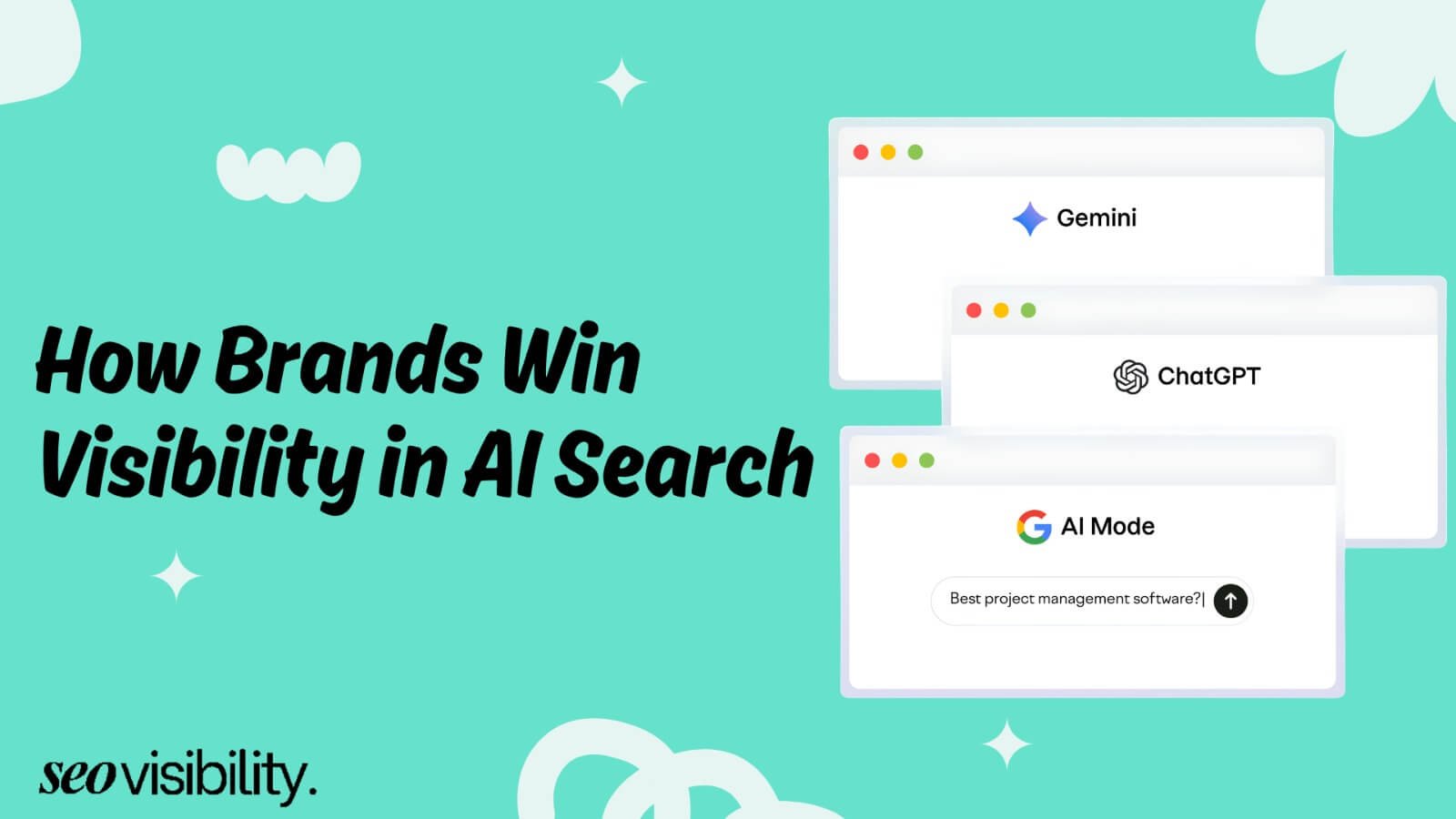
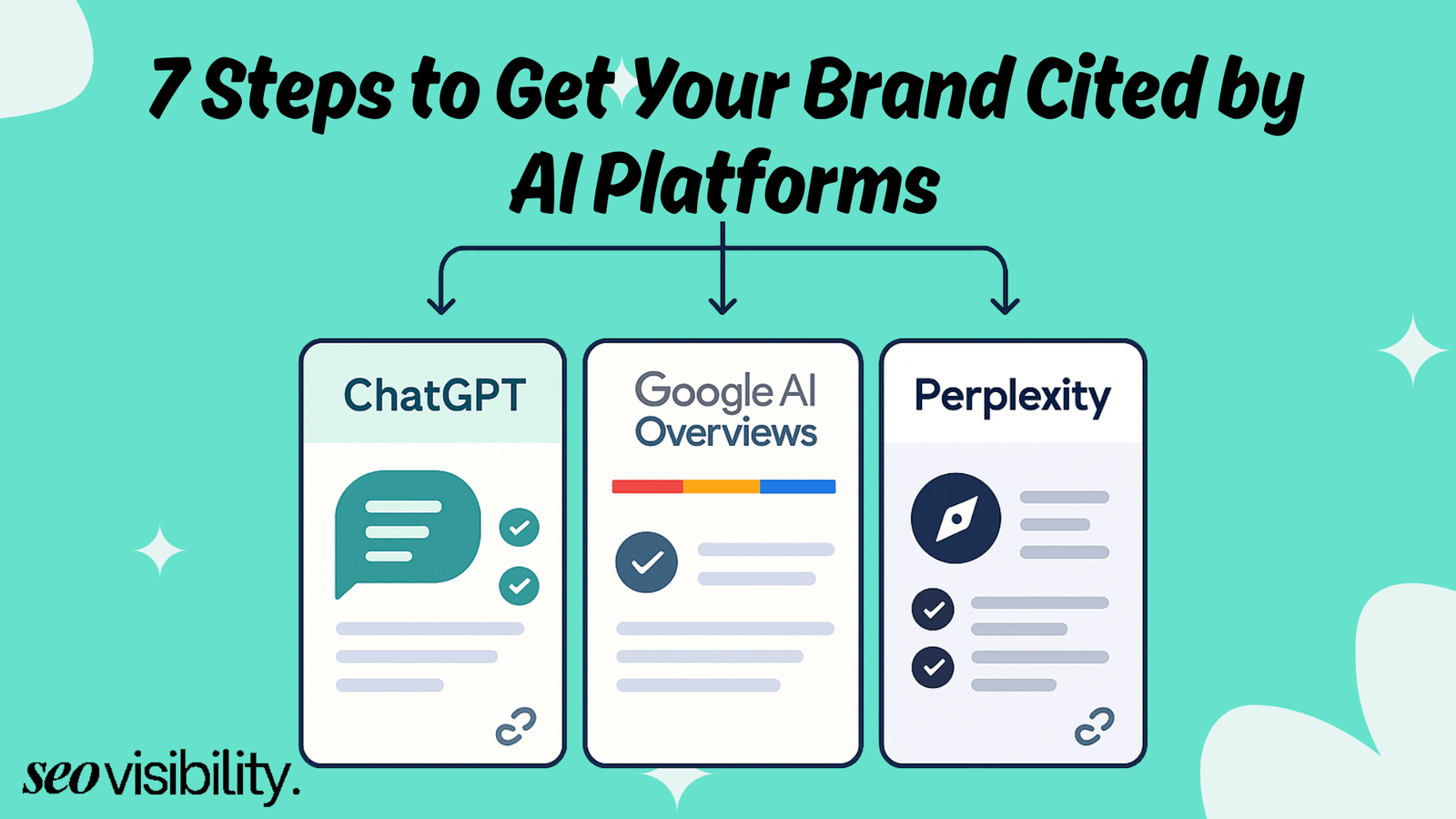
To get cited by AI search engines, make your website easy to crawl, technically sound, factually reliable, and genuinely useful for answering real user questions. Then strengthen your brand’s authority with original insights, clear entity signals, trusted third-party mentions, and ongoing visibility tracking.
AI search engines such as ChatGPT, Perplexity, Google AI Overviews, Claude, and Gemini do not choose sources randomly. They look for content that is relevant to the question, easy to understand, trustworthy, well-structured, and supported by credible signals across the web.
For brand owners, this creates a new kind of search opportunity. You do not only want an organic search ranking anymore. You want your brand, products, research, and expertise to appear inside AI-generated answers where customers are actively researching.
This guide explains how to get cited by AI search engines using a practical seven-step process. It covers the technical work, content strategy, authority building, and measurement needed to earn more AI brand mentions over time.
Why AI Citations are Important for Your Brands?
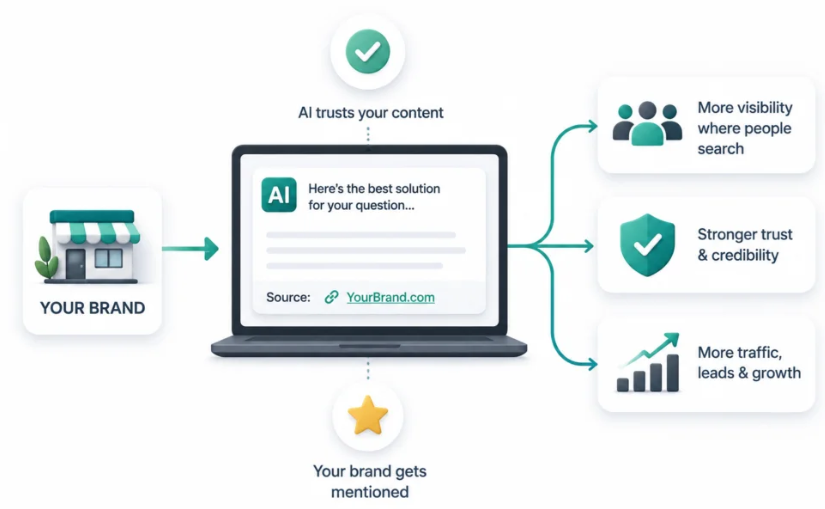
AI search is changing the way people discover businesses. Instead of opening ten search results, a user may ask an AI platform for the best CRM for small businesses, a trusted roofing contractor in Texas, or software that solves a specific problem.
The AI platform often gives a direct answer first. It may also mention brands, summarize product features, compare options, and link to supporting pages.
If your brand is included, you gain visibility at a high-intent moment. The user is already looking for help, evaluating options, or preparing to make a purchase.
AI citations can support your wider marketing goals in several ways:
- Increase brand discovery among users who do not know your business yet
- Build credibility when your company appears in a trusted AI-generated response
- Bring qualified referral traffic to useful guides, product pages, and research
- Improve conversion opportunities during commercial research queries
- Strengthen your presence beyond traditional Google rankings
- Help protect visibility as zero-click search behavior grows
However, AI citations are not guaranteed. A top Google ranking can help, but it does not automatically mean ChatGPT, Perplexity, Gemini, or Google AI Overviews will cite your content.
That is why AI search optimization needs its own strategy. You still need strong SEO fundamentals, but you must also create information that AI systems can confidently extract, verify, summarize, and attribute to your brand.
How AI Search Engines Choose What to Cite?
Most AI platforms rely on a combination of their training data, retrieval systems, web indexes, trusted publishers, knowledge sources, and live search results. The exact methods vary by platform, but the underlying patterns are similar.
AI systems tend to favor pages that answer the user’s question directly. They also prefer information that is clear, current, specific, and supported by a credible source.
Here are the core signals that influence whether your content is likely to be mentioned or cited:
| Signal | Why It Matters for AI Visibility | What to Do |
|---|---|---|
| Direct relevance | AI systems need content that closely matches the user’s prompt | Build pages around clear questions, problems, and use cases |
| Crawlability | Platforms and search engines cannot use pages they cannot access | Fix indexing, robots.txt, sitemap, canonical, and rendering issues |
| Content clarity | Simple answers are easier to extract and summarize accurately | Use plain language, headings, lists, tables, and short paragraphs |
| Topical depth | Broad but complete coverage signals genuine expertise | Cover the main topic, related questions, objections, and examples |
| First-hand expertise | Original experience makes your content more valuable than generic summaries | Add case studies, process details, testing, data, and expert analysis |
| Entity authority | Clear brand information helps systems understand who you are | Keep business details consistent across your site and trusted profiles |
| Third-party validation | Independent mentions build confidence in your claims | Earn reviews, PR coverage, industry listings, and expert references |
| Freshness | Some queries require current information | Update pages when products, data, laws, prices, or trends change |
A useful way to think about this is simple. AI platforms want to give users an answer they can trust without forcing them to do extra research.
Your job is to become one of the clearest and most credible sources available for the questions your ideal customers ask.
Step 1: Audit Your Current Visibility
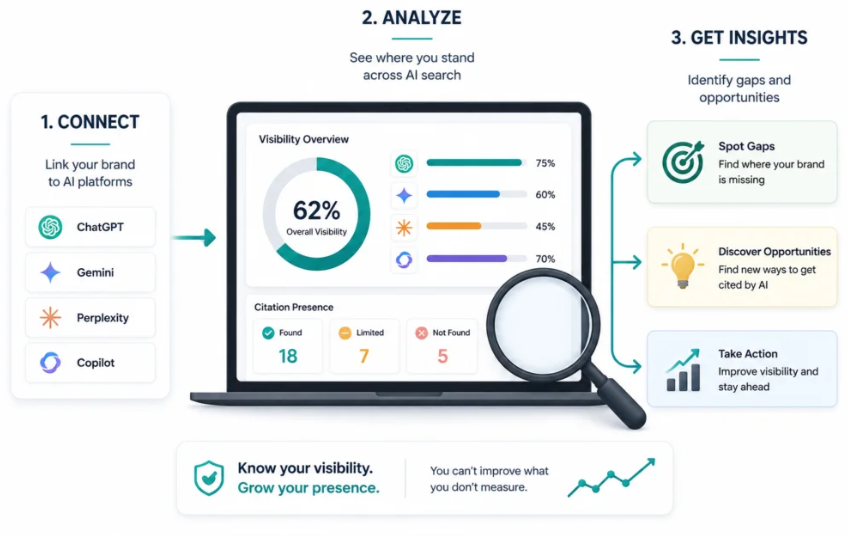
Before trying to improve AI brand mentions, find out where your brand appears today. You need a baseline so you can measure progress and identify the platforms, topics, and competitors that matter most.
Start by creating a list of important prompts. Include informational, commercial, local, comparison, problem-solving, and product-related questions your target audience may ask.
For example, a project management software company could test prompts such as:
- What is the best project management software for small agencies?
- Compare Asana and Monday.com for marketing teams
- What tools help agencies manage client approvals?
- Best workflow software for remote creative teams
- How do small agencies improve project delivery?
Run these questions in ChatGPT, Perplexity, Claude, Gemini, and Google AI Overviews where available. Record whether your business is mentioned, whether your website is cited, what page appears, and which competitors receive the most visibility.
Do not search only your brand name. The most valuable findings usually come from non-branded category questions, comparisons, and problem-based prompts.
Build a practical visibility sheet
Use a spreadsheet with columns for the following details:
| Data Point | What to Record |
|---|---|
| Prompt | The exact question entered into the AI platform |
| Platform | ChatGPT, Perplexity, Gemini, Claude, or Google AI Overviews |
| Search intent | Informational, commercial, transactional, local, or navigational |
| Brand mention | Whether your company name appeared |
| Citation or link | Whether the platform linked to your website |
| Cited URL | The exact page that received the citation |
| Competitor mentions | Brands that appeared instead of yours |
| Content format | Guide, category page, comparison, product page, research, or review |
| Date checked | The date of the test because AI responses can change |
| Notes | Missing topics, inaccurate descriptions, or opportunity areas |
This audit reveals the gap between your current visibility and the visibility you want. It also helps you avoid guessing.
For example, you may discover that AI platforms already cite your educational guides but never mention your product pages. That tells you to improve product information, comparison content, proof points, and commercial intent coverage.
You may also find that competitors appear repeatedly because they publish original research, have stronger review profiles, or are mentioned by high-authority industry websites. Those insights should shape your next actions.
Prioritize high-value prompts
Do not try to optimize for every possible AI query at once. Begin with prompts that connect directly to revenue, qualified leads, or strong customer intent.
Prioritize questions based on:
- Relevance to your core product or service
- Buying intent behind the question
- Search demand or topic importance
- Competitive difficulty
- Existing content quality
- Your ability to offer a better answer
- Likelihood of earning a citation with useful content
A smaller list of high-value questions is more useful than a large list of vague prompts. Focus on the problems your ideal customer needs solved before they become a lead or buyer.
Step 2: Fix Technical SEO Issues
AI visibility starts with technical SEO. If search engines and AI retrieval systems struggle to crawl, render, understand, or index your website, even excellent content may remain invisible.
Technical work is not the most exciting part of AI search optimization. Still, it is essential because it creates the foundation for everything else.
Make sure important pages are crawlable
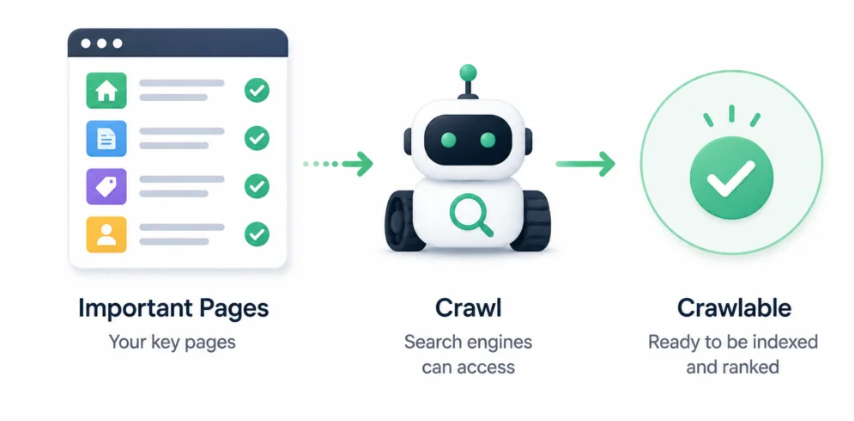
Check that your most valuable pages can be found and accessed. This includes service pages, product pages, category pages, guides, case studies, comparison pages, FAQs, and research content.
Review these areas:
- Important pages should not be blocked by robots.txt
- Pages should not carry accidental noindex tags
- Your XML sitemap should include canonical, indexable pages only
- Internal links should point clearly to priority pages
- Broken links and redirect chains should be fixed
- Canonical tags should reflect the correct version of each page
- Pages should load properly on desktop and mobile devices
- Critical information should not depend entirely on JavaScript rendering
- Duplicate pages should be consolidated where possible
A clean sitemap matters because it helps search engines discover your priority URLs. It should not contain error pages, redirects, duplicate versions, thin pages, or URLs you do not want indexed.
Improve page speed and user experience
Slow websites can create crawling issues and frustrate visitors. They can also make it harder for search systems to process pages efficiently.
Focus on practical improvements such as compressing oversized images, reducing unnecessary scripts, improving server response time, and avoiding heavy page builders where possible. You do not need a perfect performance score, but your important pages should load quickly and work smoothly.
A fast, stable page also supports trust. If an AI platform sends a user to your site, the visitor should be able to read the answer without waiting, battling pop-ups, or struggling on mobile.
Use schema markup correctly
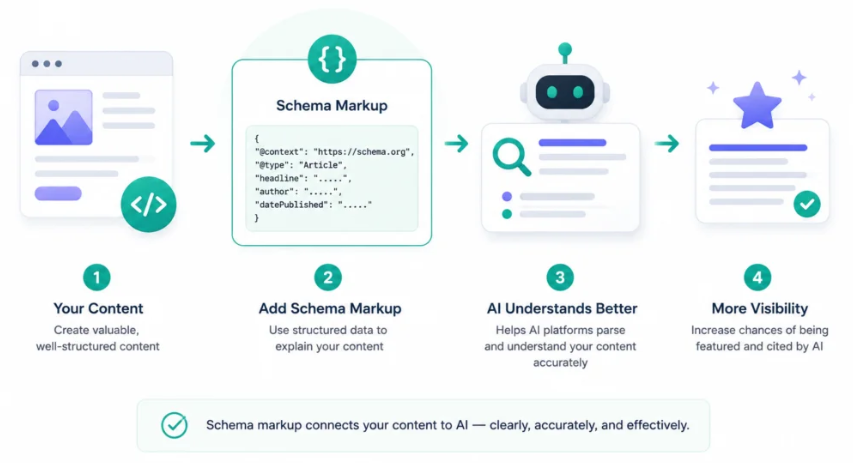
Schema markup gives search engines structured context about a page. It does not guarantee that you will get cited by AI platforms, but it makes your information easier to interpret and validate.
Use schema types that accurately match your content and business. Common options include:
- Organization schema for brand name, logo, contact details, and official profiles
- LocalBusiness schema for service-area businesses and local companies
- Product schema for product details, pricing, availability, and reviews where appropriate
- Service schema for clearly defined services
- Article schema for editorial content
- FAQPage schema when a page contains genuine FAQs visible to users
- Review schema when reviews follow platform and structured-data guidelines
- Person schema for founders, authors, and subject-matter experts
- BreadcrumbList schema to clarify site structure
Do not use schema to mark up content that does not exist on the page. Avoid stuffing every possible schema type onto a URL just because it is available.
Structured data works best when it reflects real, visible information. Keep it accurate, consistent, and aligned with your site content.
Build a strong internal linking system
Internal links help search engines understand which pages matter and how your topics connect. They also guide users toward the next useful step.
Link from high-authority pages to important commercial and informational pages. Use descriptive anchor text that tells readers and systems what the linked page covers.
For example, if you publish a guide about AI search optimization, naturally link to related pages about content audits, technical SEO, entity SEO, digital PR, and LLM SEO services. This builds topical connections rather than leaving every page isolated.
Step 3: Optimise Existing Content
You probably do not need to start from zero. Many brands already have useful blog posts, landing pages, help articles, and case studies that can be improved for AI visibility.
Begin with pages that already rank, attract traffic, earn backlinks, or cover important customer questions. Updating these pages is often faster and more effective than publishing dozens of new articles.
Start with direct answers
AI platforms need content they can understand quickly. Place a concise answer immediately after the introduction or under the relevant heading.
For example, if your page targets the question “how to get mentioned by AI,” answer it clearly:
To get mentioned by AI, publish accurate content that answers specific user questions, support it with evidence, make it crawlable, and earn trusted mentions across the web.
Then expand on the answer. This structure helps both readers and AI systems identify the main point without digging through long introductions.
Use conversational headings
Traditional keyword-focused headings can still work, but natural question-based headings are especially useful for AI search. They mirror the language people use when asking ChatGPT, Perplexity, Claude, and Gemini for help.
Instead of writing a generic heading like “Benefits,” consider headings such as:
- Why do AI platforms cite some brands more than others?
- What makes a website trustworthy for AI search?
- How can local businesses improve AI visibility?
- Which pages are most likely to earn AI citations?
- What should you measure in an AI visibility audit?
This does not mean every heading must be a question. Use a mix of clear statements and natural questions so the page remains easy to scan.
Add helpful FAQs
FAQs can fill important gaps in your content. They work best when they answer real questions your buyers ask during research, not when they repeat the same keyword in slightly different forms.
Good FAQ topics may include:
- Can a small business get cited by AI platforms?
- Does ranking on Google improve AI visibility?
- How long does AI search optimization take?
- Do backlinks still matter for AI brand mentions?
- Can product pages appear in AI-generated answers?
- What is the difference between AI citations and traditional rankings?
Keep each answer direct. If the topic needs a longer explanation, link to a dedicated guide rather than forcing every detail into one FAQ section.
Refresh facts, examples, and claims
AI systems are more likely to trust content that is current and internally consistent. Review older pages for outdated statistics, discontinued products, broken references, old screenshots, inaccurate pricing, and irrelevant examples.
Add a visible “last updated” date when you make meaningful changes. More importantly, make the update real.
Changing the date without improving the content does not create value. Update the information, examples, recommendations, and evidence so the page deserves to be treated as current.
Step 4: Build Conversation Authority
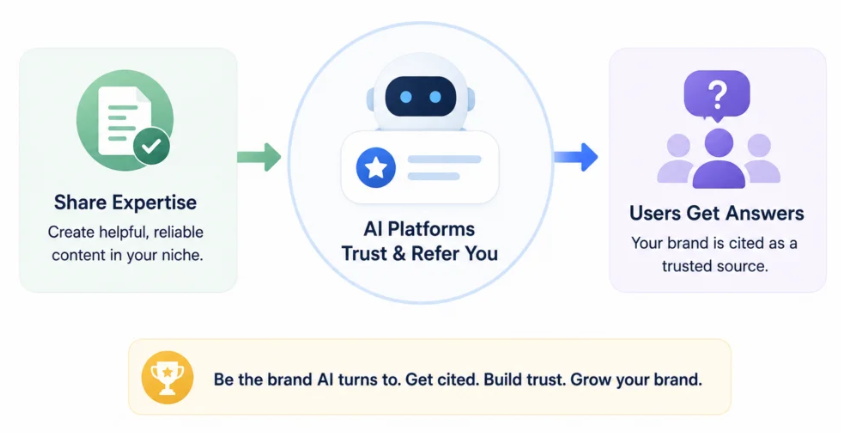
Conversation authority means becoming a brand that AI platforms can refer to when users ask questions in your area of expertise. It comes from publishing useful material that adds something new to the conversation.
Generic content rarely earns strong AI visibility. If your article only repeats what every competitor already says, there is little reason for an AI system to select it over established sources.
Publish original research and data
Original research is one of the strongest assets you can create. It gives journalists, bloggers, customers, analysts, search engines, and AI systems a reason to reference your brand.
Your research does not need to be expensive or massive. It needs to be reliable, clearly explained, and relevant to your industry.
You could create:
- Surveys of customers or industry professionals
- Analyses of public datasets
- Benchmarks from anonymized client data
- Pricing studies across a product category
- Trend reports based on your own observations
- Original testing of tools, products, workflows, or methods
- Local market reports for a city, region, or service area
- Before-and-after performance studies with documented methodology
For instance, an SEO agency could analyze a sample of websites appearing in AI Overviews and identify common content structures, schema usage patterns, or authority signals. A SaaS business could publish benchmark data on how teams use its product category.
Be transparent about your method. Explain the sample size, time period, data source, limitations, and how you reached your conclusions.
That honesty makes the research more credible. It also reduces the risk of publishing claims that are misleading or too broad.
Share experience, not recycled advice
Your brand should show that it has done the work. This is particularly important for topics where readers need practical guidance before making a decision.
Add first-hand insights such as:
- Common mistakes you see in client accounts
- A framework your team uses to solve a recurring problem
- Lessons learned from testing different approaches
- Real outcomes from a project, with permission and context
- Clear explanations of what did not work and why
- Screenshots, process visuals, or documented workflows where useful
For example, rather than saying “improve your content quality,” explain how you evaluated content quality, what you changed, and what happened next. Specific experience gives your pages a stronger reason to be cited.
Become quotable
AI platforms often summarize concise, useful statements. Make important insights easy to quote without removing the context that makes them accurate.
Use short definitions, checklists, tables, practical frameworks, and clear recommendations. Include supporting explanation directly around each claim so your content is not easy to misinterpret.
For example:
An AI citation is a reference, link, or attributed mention that an AI platform includes to support its answer.
That short definition can be followed by examples of citations in AI Overviews, source links in Perplexity, and brand mentions in conversational answers.
The goal is not to write for machines alone. The goal is to make expert information easy for humans and systems to understand.
Step 5: Create AI-Optimised Content
AI-optimized content is not a separate type of writing that ignores normal SEO. It is high-quality content designed around clear questions, complete answers, real expertise, and accessible structure.
The best pages serve readers first. They also make it easier for AI systems to identify what the page is about, what claims it makes, and when it should be recommended.
Match content to real prompts
Build content around the questions people ask at different stages of the buying journey. Consider informational queries, evaluation questions, comparison prompts, and implementation concerns.
Here is a useful content map:
| User Need | Example AI Prompt | Best Content Format |
|---|---|---|
| Learn a concept | What is AI search optimization? | Beginner guide or glossary page |
| Solve a problem | Why is my business not showing in AI search? | Diagnostic guide or troubleshooting article |
| Compare options | Which AI SEO tool is best for agencies? | Comparison page with clear criteria |
| Evaluate a service | Do I need an AI SEO consultant? | Service page, buyer guide, and case studies |
| Find a provider | Best AI SEO agency for ecommerce brands | Expert list, proof-led service page, and reviews |
| Understand a process | How do I get cited by AI platforms? | Step-by-step guide like this article |
| Check trust | Is this company reliable? | About page, reviews, case studies, policies, and third-party coverage |
Do not create separate pages for every tiny wording variation. Instead, build comprehensive pages that answer the central topic and cover related questions naturally.
Use a clear answer structure
A strong AI-friendly article often follows this pattern:
- Give the direct answer.
- Explain why it matters.
- Show the process or framework.
- Provide examples or evidence.
- Address common questions and objections.
- Offer the next practical step.
This structure works because users can get an answer quickly. Readers who need more detail can continue through the guide.
Cover a topic in depth
Thin content is unlikely to stand out. A page should cover the core question thoroughly, but it should not become a long collection of unrelated advice.
For a guide on how to get cited by AI platforms, relevant supporting topics include technical SEO, content structure, original research, entity signals, citations, reviews, monitoring, competitor analysis, and platform differences. Topics such as unrelated social media tactics or generic business advice would dilute the page.
Topical depth comes from answering the right follow-up questions. It does not come from repeating the main keyword in every paragraph.
Build high-value content formats
Some content formats are especially helpful for AI visibility because they provide clear, structured answers:
- Definitive guides that explain a topic from basics to advanced steps
- Original research reports with transparent methodology
- Product comparison pages that use fair criteria
- Alternative pages for users comparing competing options
- Case studies with context, process, and results
- Industry glossaries that define key terms clearly
- Troubleshooting guides for specific problems
- Expert roundups with real contributions from qualified people
- Local guides with firsthand knowledge and current details
- Resource hubs that connect related topics and services
Use tables where they simplify decisions. Use bullet points when readers need a checklist. Use examples when a concept is difficult to apply.
The format should make the information easier to use, not simply make the page longer.
Step 6: Build Entity Signals
AI platforms need to understand who your business is, what it offers, where it operates, and why it can be trusted. These are called entity signals.
A strong entity presence reduces confusion. It also makes it easier for systems to connect your website with mentions, reviews, profiles, authors, products, and third-party references across the web.
Make your brand information consistent
Use the same core information across your website and reputable profiles:
- Official business name
- Website URL
- Business description
- Founder or leadership details
- Products and services
- Location or service areas
- Contact details
- Social profiles
- Customer support information
- Brand logo and images
- Industry categories
Your About page is especially important. It should clearly explain who you are, what you do, who you serve, why you are qualified, and how customers can contact you.
For a service business, include real experience, team credentials, areas of specialization, client types, and proof of work. Avoid vague claims like “the best” unless you can support them with specific evidence.
Earn mentions from trusted websites
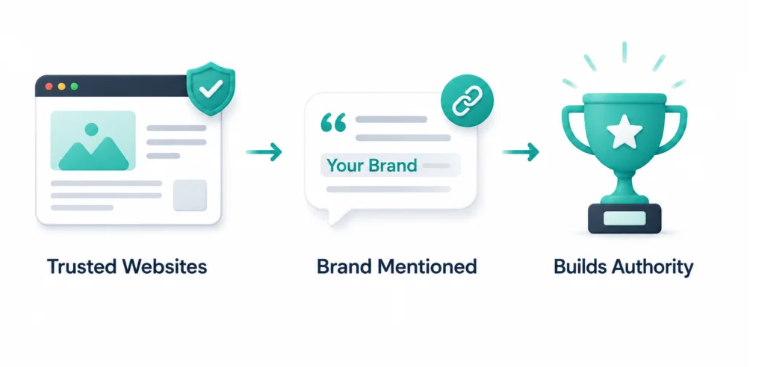
Third-party mentions help validate your brand beyond your own website. AI systems are more likely to trust a business that appears consistently across relevant, credible sources.
Focus on quality and relevance rather than collecting hundreds of low-value directory listings. Good opportunities may include:
- Industry publications
- Professional associations
- Reputable business directories
- Trade websites
- Partner websites
- Podcast guest appearances
- Expert interviews
- Event speaker pages
- Digital PR coverage
- Independent review platforms
- Local chambers of commerce
- Relevant niche communities
- Supplier, client, or technology-partner pages
A link can be valuable, but a brand mention can also matter. The best mentions provide context about what your company does and why someone should trust it.
For example, a profile that says a company is an experienced ecommerce SEO consultant is more useful than a bare company name in a random list. Context helps AI systems connect your brand to a category and area of expertise.
Strengthen author credibility
People often trust content more when they know who created it. AI platforms also benefit from clear author information when evaluating expertise.
Add author pages for writers and subject-matter experts. Explain their background, professional experience, relevant qualifications, published work, and areas of expertise.
Link author profiles to the articles they write. Add Person schema where appropriate and keep the information consistent with professional profiles elsewhere online.
For high-stakes topics, author credibility matters even more. If you cover financial, legal, health, safety, or other sensitive areas, use qualified experts and review processes.
Manage reviews and reputation
Reviews are part of your wider trust footprint. Ask satisfied customers for honest feedback on platforms that matter in your industry.
Never buy reviews or pressure clients to write overly positive comments. A natural mix of feedback is more credible than a suspiciously perfect profile.
Respond to reviews professionally, including negative ones. A calm, helpful response shows prospective customers that your company takes accountability seriously.
Step 7: Monitor and Scale
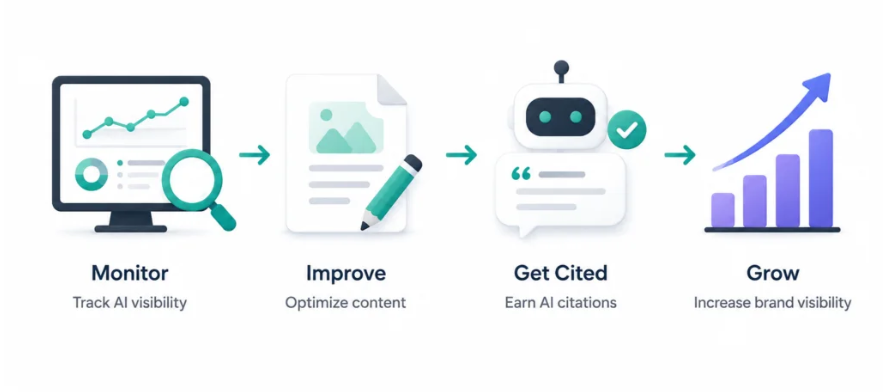
AI visibility is not a one-time project. AI platforms change their models, source preferences, search integrations, and answer formats over time.
Your own visibility can also shift as competitors publish new content, earn press coverage, improve their websites, or launch original research. Regular monitoring helps you spot both opportunities and risks.
Track the right metrics
Traditional SEO metrics still matter, but they do not tell the full story. Add AI-specific tracking to your reporting.
Monitor:
- Number of prompts where your brand is mentioned
- Number of prompts where your website is cited or linked
- Citation frequency by platform
- Share of voice compared with key competitors
- Pages most frequently cited by AI systems
- Brand sentiment and accuracy in AI responses
- Referral traffic from AI platforms
- Conversions from AI referral visitors
- Topic clusters that produce the most mentions
- Competitor sources that appear repeatedly
- Changes in visibility after content or technical updates
Keep a record of exact prompts. Small changes in wording can lead to different AI answers, so prompt tracking is important for reliable comparisons.
Find your winning content patterns
After several weeks or months of tracking, look for patterns. You may find that certain formats, topics, or pages earn most of your citations.
For example, your original research may be cited more often than standard blog posts. Your comparison pages may earn more commercial mentions, while your FAQs may appear for problem-solving questions.
When you find what works, scale the pattern carefully. Create related research, expand successful topic clusters, refresh winning pages, and build internal links to strengthen them further.
Do not copy and paste the same structure across dozens of pages. Use the insight to create better content that serves related user needs.
Update high-potential pages regularly
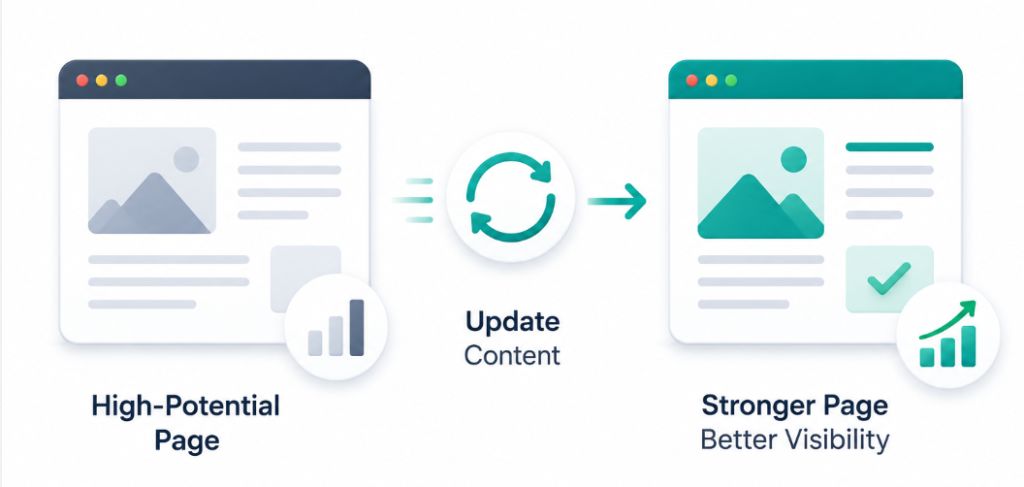
If a page appears occasionally in AI-generated answers, treat it as a high-potential asset. Improve it before creating an entirely new page.
You can strengthen it by:
- Adding clearer answers near the top
- Including firsthand examples
- Updating old information
- Improving internal links
- Adding a comparison table or checklist
- Expanding missing subtopics
- Adding stronger author credentials
- Clarifying claims with evidence
- Improving page speed and readability
- Earning relevant third-party mentions to the page or brand
Small improvements can produce meaningful results when the page already has some visibility. Focus on pages that sit close to earning more frequent citations.
Many companies approach AI visibility as a quick publishing exercise. That often leads to thin content, unclear claims, and weak results.
Avoid these common mistakes:
- Writing articles that repeat what competitors already publish
- Publishing large volumes of low-quality AI-generated content without expert review
- Ignoring crawlability, indexing, internal links, and site structure
- Stuffing keywords instead of answering real questions
- Creating pages without a clear user need or search intent
- Making unsupported claims about products, rankings, or results
- Using fake reviews, paid links, or low-quality directory spam
- Hiding important content behind scripts, login walls, or poor navigation
- Treating schema markup as a shortcut instead of supporting real page content
- Tracking only Google rankings and ignoring AI mentions
- Failing to update outdated guides, statistics, and product information
- Forgetting to build a clear brand entity across trusted websites
Hire an AI Search Marketing Specialist to Get Cited by AI Platforms
Getting your brand cited by AI platforms comes down to combining clean technical SEO, answer-first content structure, original data, and consistent entity signals across the web.
Follow the seven steps above and track your progress every few months, and your brand will start showing up in the AI conversations that matter to your customers.
At SEO Visibility, Khalid Hussain has spent 15 years helping brands grow their search visibility, and now applies that same expertise to AI search optimization for over 999 businesses, agencies, and eCommerce stores.
If you want a dedicated partner to audit your AI visibility and build a strategy around getting mentioned by AI, reach out through seovisibility.co and start turning AI search into a real growth channel for your brand.


![How Much Does an SEO Expert Cost in 2026 [SEO Pricing]](https://seovisibility.co/wp-content/uploads/2026/01/how-much-does-an-seo-expert-cost.png)
![SEO Copywriting Checklist [Easy to Follow Guidelines]](https://seovisibility.co/wp-content/uploads/2026/01/seo-copywriting-checklist.png)