SaaS SEO is the process of optimizing your software product’s website to rank in search engines and turn organic traffic into free trials, demo requests, and paying customers.
Unlike traditional SEO, SaaS SEO targets buyers at every stage of the decision cycle – from people researching a problem to those ready to compare tools and pull out a credit card.
If you want to grow monthly recurring revenue (MRR) without burning a budget on paid ads, SEO is the most cost-efficient channel available to you in 2026.
This guide gives you a practical, step-by-step SaaS SEO strategy built specifically for founders, marketing leaders, and growth teams at B2B SaaS companies. Every section maps directly to revenue, not just rankings.
What Makes SEO for SaaS Different
Most SEO guides are written for blogs or e-commerce sites. SaaS SEO is a different discipline entirely.
Here is why:
Your buyers do not make impulse decisions. B2B SaaS buyers go through a longer research cycle. They search for their problem first, then evaluate solution types, and then compare specific tools. Your SEO strategy has to cover all three stages – and each stage needs a different type of content and page.
Your product is invisible until someone uses it. You cannot sell a feeling or show a product photo. You have to educate your buyer at every step, which means your content has to do most of the sales work.
Your competitors are well-funded. Most SaaS niches have multiple well-resourced companies competing for the same keywords. That means you need a smarter keyword framework, not just more content.
SaaS SEO also connects directly to business metrics like MRR, churn, and CAC in ways that a standard traffic-first SEO strategy does not. The goal is not to rank – it is to drive signups, demos, and customers.
Keyword Research Strategies for SaaS SEO
Keyword research for SaaS should be organized by funnel stage, not by search volume. High-volume keywords often attract browsers, not buyers. Low-volume, high-intent keywords attract decision-makers who are ready to act.
Here is the four-bucket framework to use.
Bottom of Funnel (BOFU) – Highest Priority
These are your money keywords. People searching here are already comparing solutions and ready to make a decision. Target these first.
- [Competitor] alternative
- Best [category] software
- [Product] vs [Competitor]
- [Product] pricing
- [Product] for [specific industry or use case]
- [Category] tool for [company size]
BOFU keywords typically have lower search volume but much higher conversion rates. A keyword getting 200 searches per month with a $30 CPC signals serious buyer intent – and that is worth more than a 10,000 monthly search term with no purchase intent behind it.
Middle of Funnel (MOFU) – Evaluation Stage
These buyers understand their problem and are now evaluating solution types. They are comparing approaches, not specific vendors yet.
- “How to choose [solution type]”
- “What to look for in [product category]”
- “Build vs buy [solution]”
- “[Solution type] for [industry/company size]”
Top of Funnel (TOFU) – Awareness Stage
These researchers are researching a problem your product solves. They are not ready to buy yet, but strong TOFU content builds brand awareness and keeps you in the running when they do start comparing tools.
- “How to reduce [problem your product solves]”
- “What is [concept related to your category]”
- “Why does [business problem] happen”
How to Find Keywords for Saas
Start with what you already know. Pull your support tickets, sales call transcripts, and onboarding surveys. The exact phrases your customers use to describe their problems are often exact search queries.
Then go external:
- Use Ahrefs or Semrush to run a competitor gap analysis – find every keyword your competitors rank for that you do not
- Check G2, Capterra, and similar review platforms – read the pros and cons in customer reviews for the language real buyers use
- Search Reddit for “[your category] + recommendation” or “[your category] + vs” – real buying conversations reveal vocabulary your marketing team does not use internally
- Check the “People Also Ask” boxes in Google for your core keywords – these reveal question-based queries with lower competition but strong intent
How to Prioritize Keywords
Once you have a list, score each keyword on three factors:
- Intent quality – Is this someone who might buy, or someone just curious?
- Keyword difficulty – For newer SaaS sites with a Domain Rating under 30, target keywords with difficulty under 20 first. Build authority with easier wins before going after harder terms.
- SERP reality – Look at what actually ranks. If the top 10 results are all from sites with a DR of 80+, you need a more specific angle or a long-tail variation.
Content Strategies for SaaS SEO
Once you have your keywords organized by funnel stage, you need a content architecture that builds topical authority efficiently. The hub-and-spoke (pillar and cluster) model is the most effective structure for SaaS SEO in 2026.
Here is how it works.
Pillar pages are comprehensive guides (2,500 to 5,000 words) covering a broad topic related to your product category. These are not product pages – they are educational resources that establish your authority on a subject.
Cluster pages are focused articles (1,500 to 2,500 words) that go deep on a specific subtopic within that pillar. Each cluster page links back to the pillar using consistent anchor text, and the pillar links out to each cluster.
For example, if you sell project management software:
- Pillar page: “The Complete Guide to Project Management for Remote Teams”
- Cluster pages: “How to run async standups,” “Project management tools for engineering teams,” “Asana vs Monday for remote teams,” “How to choose project management software”
Most B2B SaaS pillars settle at 10 to 15 cluster pages. Below 5 cluster pages, the structure does not carry enough topical authority signal. Above 20, the pillar starts to look like a directory.
Five Cluster Types That Build Authority
| Cluster Type | Example Format | Funnel Stage | Purpose |
|---|---|---|---|
| Definitional | “What is [concept]?” | TOFU | Builds topical authority, captures awareness traffic |
| Comparison | “[Tool A] vs [Tool B]” | BOFU | Captures ready-to-buy traffic, drives conversions |
| How-to | “How to [achieve outcome]” | MOFU | Builds trust, shows product value in context |
| Implementation | “[Tool] setup for [use case]” | MOFU/BOFU | Attracts users evaluating specific workflows |
| Diagnostic | “Why [problem] happens” | TOFU/MOFU | Reaches buyers early in their research |
Technical SEO Strategies for SaaS
Before any content strategy can work, your technical foundation needs to be solid. Technical SEO problems waste all the content effort you put in on top.
Here are the core technical areas to get right.
Core Web Vitals
Google uses Core Web Vitals as a ranking signal. Focus on:
- LCP (Largest Contentful Paint) under 2.5 seconds
- CLS (Cumulative Layout Shift) as close to zero as possible
- INP (Interaction to Next Paint) under 200ms
Use Google Search Console and PageSpeed Insights to monitor these. SaaS apps often have heavier JavaScript loads – make sure your marketing site is separate from or properly optimized relative to your product interface.
Crawlability and Indexing
- Submit an XML sitemap that excludes test environments, parameter URLs, and staging pages
- Use logical, clean URL structures (no dynamic parameters in crawlable URLs)
- Set up proper canonical tags to prevent duplicate content issues, especially on pricing pages with multiple plan variations
- Check Google Search Console’s URL inspection tool regularly and use Ahrefs or Semrush for bulk index health checks
Schema Markup for SaaS
SaaS sites should use structured data beyond the basic Article schema. Mark up:
- SoftwareApplication schema with pricing tiers, features, and trial availability
- FAQPage schema on content pages to capture “People Also Ask” real estate
- Organization schema for brand trust signals
- BreadcrumbList schema for site navigation
In 2026, schema also helps your content get cited by AI Overviews and AI-powered search engines – a growing traffic source that is increasingly important for B2B SaaS visibility.
Site Architecture
Every important page should be reachable within two or three clicks from the homepage. Orphan pages (pages with no internal links pointing to them) get crawled less frequently and rank poorly. Use a logical hierarchy: Homepage > Category/Pillar > Cluster/Feature > Conversion page.
Mobile-First
B2B buyers increasingly research on mobile – even for high-ticket SaaS purchases. Make sure every page on your site works well on a phone screen, not just your homepage.
On-Page SEO Strategies for SaaS
Technical SEO gets you in the game. On-page SEO is how you win it.
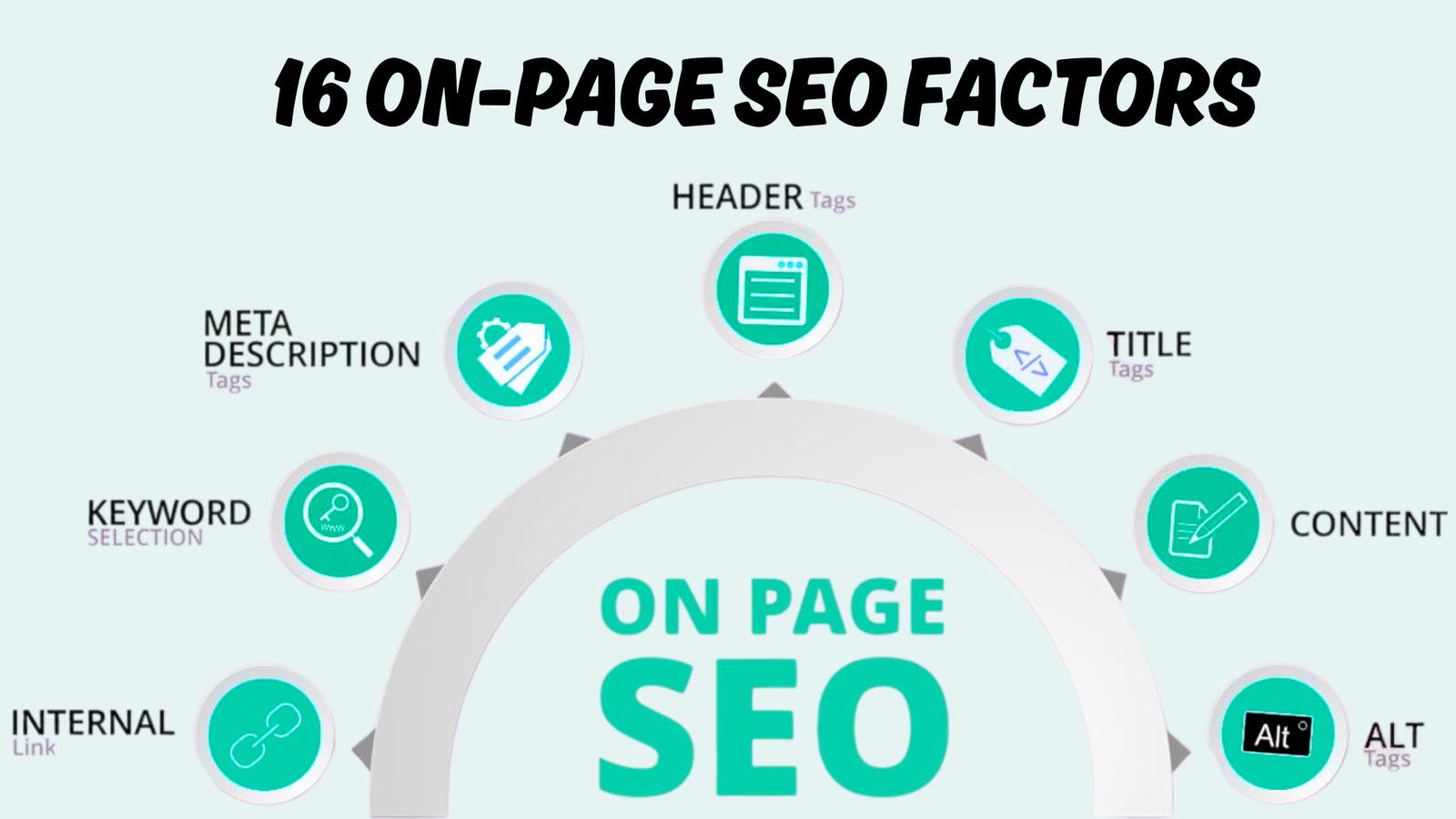
For every page you publish, cover these elements:
- Title tag: Include your primary keyword, keep it under 60 characters, and make it compelling enough to earn the click in a competitive SERP
- Meta description: Use the primary keyword naturally, keep it under 160 characters, and write it as an invitation to click – not a keyword list
- H1: One per page, contains the primary keyword, matches searcher intent
- H2 and H3 headings: Use secondary keywords and related terms naturally throughout the content structure
- First paragraph: State the primary keyword within the first 100 words and deliver an immediate, direct answer to the searcher’s question
- Internal links: Every new page should link to at least 3 to 5 existing relevant pages on your site, and existing pages should link back to the new one where relevant
- Image alt text: Describe images accurately using relevant keywords where natural – not keyword-stuffed descriptions
- URL structure: Keep URLs short, descriptive, and keyword-relevant (e.g., /saas-seo-strategy not /blog/post-1234)
Link Building Strategies for SaaS
Backlinks remain one of the strongest ranking signals in 2026. But the approach has changed. Generic link-building outreach and directory submissions barely move the needle. What works now is building authority through methods that have natural alignment with your product and audience.
Here are the highest-ROI link-building strategies for SaaS companies.
Original Data and Research Reports
If your product generates usage data, publish an annual “State of [Your Industry]” report. Journalists and bloggers cite original statistics, and those citations compound link value over years. This is one of the most scalable SaaS link-building strategies available.
Integration Partner Co-Marketing
If you integrate with Zapier, HubSpot, Salesforce, or any established platform, proactively pursue a listing on their app marketplace or integration directory. These pages are high-authority, highly relevant, and directly reach buyers already looking for tools like yours.
Free Tools and Calculators
A well-built free tool – a “SaaS Runway Calculator,” an SEO audit widget, or a pricing comparison tool – attracts passive, high-authority links as people bookmark and share it in communities. It also generates qualified leads at the same time.
Guest Posts on Niche-Relevant Sites
Guest posting still works, but only on publications your actual buyers read. If you sell project management software, posting on operations blogs and engineering leadership publications drives both links and qualified referral traffic. Avoid generic marketing blogs – focus on where your ICP spends time.
Competitor Backlink Gap Analysis
Pull your top 3 to 5 competitors into Ahrefs or Semrush and run a backlink gap analysis. This shows every site linking to your competitors but not to you. These sites have already proven they will link to content in your space – you just need to give them a better reason.
Unlinked Brand Mentions
As your SaaS grows, people mention you on Reddit, niche blogs, and forums without linking. Set up Google Alerts for your brand name. When someone mentions you without a link, a friendly outreach message asking them to add a link converts at a surprisingly high rate.
Digital PR
Use platforms like Featured or Connectively to provide expert quotes for journalists covering your space. A single mention in a relevant industry publication delivers both a high-authority link and an E-E-A-T trust signal.
What to Avoid
- Link packages on Fiverr or any service promising “100 links for $50”
- Private blog network (PBN) links – these carry penalty risk and zero long-term value
- Reciprocal link swaps with unrelated sites
- Links from sites with no real traffic or obvious “link farm” characteristics
Expect to invest $200 to $1,000 per link if you hire a reputable agency to build links on your behalf. One link from a relevant B2B publication is worth more than 100 links from random sites.
Getting Your Saas Business Cited in AI Search
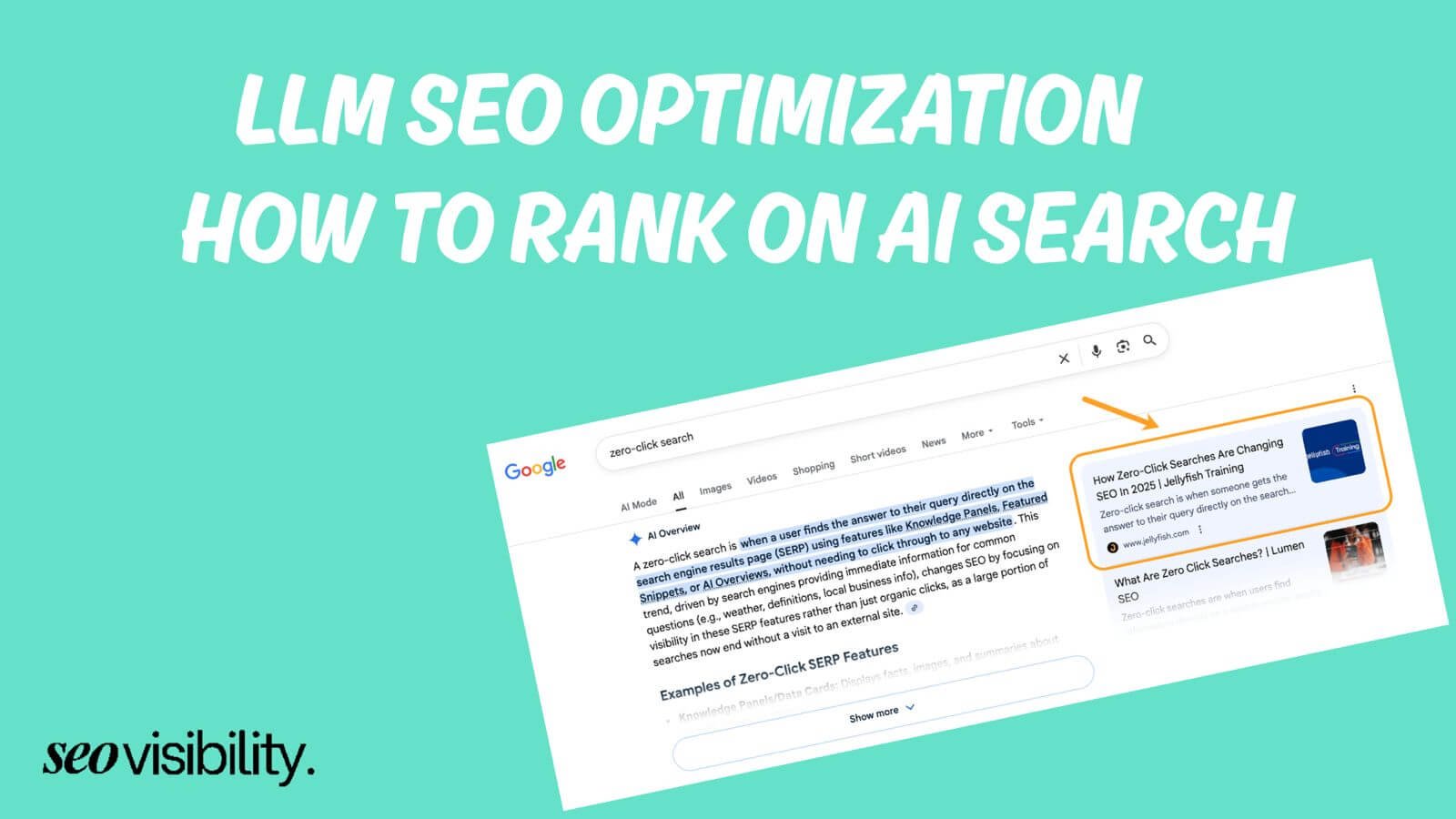
In 2026, ranking on Google is no longer the only objective. AI-powered search tools like ChatGPT, Perplexity, and Google’s AI Overviews are increasingly the first place B2B buyers look for software recommendations. Getting cited in these results requires a specific approach called Answer Engine Optimization (AEO).
Here is how to optimize for AI citations:
- Lead every article with a concise, direct answer (40 to 60 words) – AI engines extract summary answers from the top of well-structured content
- Use clear entity definitions – Define key terms explicitly (“SaaS SEO is…”) because AI systems prefer content that defines concepts clearly
- Add FAQ sections to every major page – Question-and-answer format is highly extractable by AI
- Back claims with statistics – AI engines preferentially cite data-backed content over opinion
- Use comparison tables – Structured data is easy for AI to parse and present in generated answers
- Make sure your AI crawlers are not blocked – Check that GPTBot, Perplexity-User, and other AI crawlers are permitted in your robots.txt
Track whether your brand appears in AI-generated answers for your target queries. If competitors are being cited and you are not, that is a visibility gap to close.
How to Measure SaaS SEO Performance
Stop reporting on vanity metrics. Rankings at position 3 do not pay the bills. The metrics that matter for SaaS SEO connect directly to revenue.
Below are the 3 most important SEO Metrics That Actually matter to track.
1. Organic MRR
Organic MRR is your north star metric. Monthly recurring revenue from organic-sourced customers tells you whether your SEO is actually growing the business. To track it, tag leads by source in your CRM and connect that data to activation and revenue events.
The formula: Organic Signups x Trial-to-Paid Rate x Average Contract Value = Organic MRR contribution
2. Bottom-Funnel Keyword Traffic
Not all traffic is equal. 100 visitors from “best [your category] software” is worth more than 1,000 visitors from “what is [category].” Separate your keyword tracking by funnel stage – BOFU, MOFU, and TOFU – and monitor each bucket independently.
3. Organic Conversion Rate by Funnel Stage
10% of your pages drive 90% of your conversions. Identify your highest-converting pages in Google Analytics by filtering for organic traffic and tracking trial signup or demo request events. The benchmark for money pages is a 2 to 5% conversion rate per 1,000 organic sessions.
Secondary Metrics Worth Tracking
| Metric | What It Tells You | Tool to Use |
|---|---|---|
| Non-branded organic traffic | How much SEO is earning (vs. brand search) | Google Search Console |
| Organic CAC | Cost to acquire one customer via SEO | CRM + Analytics |
| Traffic value | What would you pay in ads for equivalent traffic | Ahrefs |
| Backlink domain growth | Authority building momentum | Ahrefs / Semrush |
| AI citation frequency | Brand visibility in AI-powered search | Manual checks / Brand24 |
| Keyword movement by intent | BOFU, MOFU, TOFU ranking health | Semrush / Ahrefs |
SaaS SEO vs. Paid Ads: Which Drives More Customers
One question founders often ask is whether to prioritize SEO or paid ads for customer acquisition. The honest answer is that both have a role, but SEO is the better long-term investment for most SaaS companies.
| Factor | SaaS SEO | Paid Ads |
|---|---|---|
| Time to results | 3 to 12 months | Days |
| Cost per acquisition | Decreases over time | Increases with competition |
| Traffic sustainability | Continues after investment stops | Stops immediately when the budget pauses |
| Compounding value | Yes – content and links compound | No – each campaign starts fresh |
| Best for | Long-term revenue growth, brand authority | Fast tests, launch campaigns, retargeting |
| Conversion rates | High for BOFU content | Varies widely by ad quality |
The ideal approach for most SaaS companies is to use paid ads to fund growth in the short term while building the organic foundation that reduces CAC over time.
Once SEO kicks in – usually at the 6 to 12 month mark – the cost per customer from organic traffic drops significantly compared to paid channels.
SaaS SEO Action Plan by Months
If you are just building your SEO strategy or starting a new program, here is a prioritized order of operations.
Month 1 to 2: Foundation
- Conduct a full technical SEO audit and fix crawl errors, speed issues, and indexation problems
- Set up Google Search Console, Google Analytics 4, and an SEO tool like Ahrefs or Semrush
- Map your keyword universe using the four-bucket framework
- Identify your top 3 to 5 BOFU keyword targets
Month 2 to 4: BOFU Content First
- Publish comparison pages for your top 3 competitors
- Build out pricing and alternative pages
- Create integration landing pages for your key integrations
- Optimize existing pages with proper on-page elements
Month 4 to 6: Content Clusters
- Define 2 to 3 content pillars tied to your core product features or categories
- Build 5 to 10 cluster pages per pillar
- Implement bidirectional internal linking throughout the cluster
- Start link-building outreach with a competitor backlink gap analysis
Month 6 onwards: Scale and Optimize
- Begin MOFU and TOFU content to build long-term topical authority
- Launch a link-building program (guest posts, original research, integration partnerships)
- Start a quarterly content refresh cycle for existing pages
- Optimize top-performing organic pages for conversion rate
Start Growing Your Saas Revenue with the Professional SEO Expert
SaaS SEO in 2026 is not about chasing rankings or hitting monthly traffic milestones. It is about building a system that consistently brings decision-ready buyers to your product – and converts them.
The companies winning with organic search right now have stopped treating SEO as a content production exercise and started treating it as a revenue channel. They prioritize BOFU keywords over volume, build content clusters instead of random blog posts, maintain a strong technical foundation, and measure everything against MRR.


![How Much Does an SEO Expert Cost in 2026 [SEO Pricing]](https://seovisibility.co/wp-content/uploads/2026/01/how-much-does-an-seo-expert-cost.png)