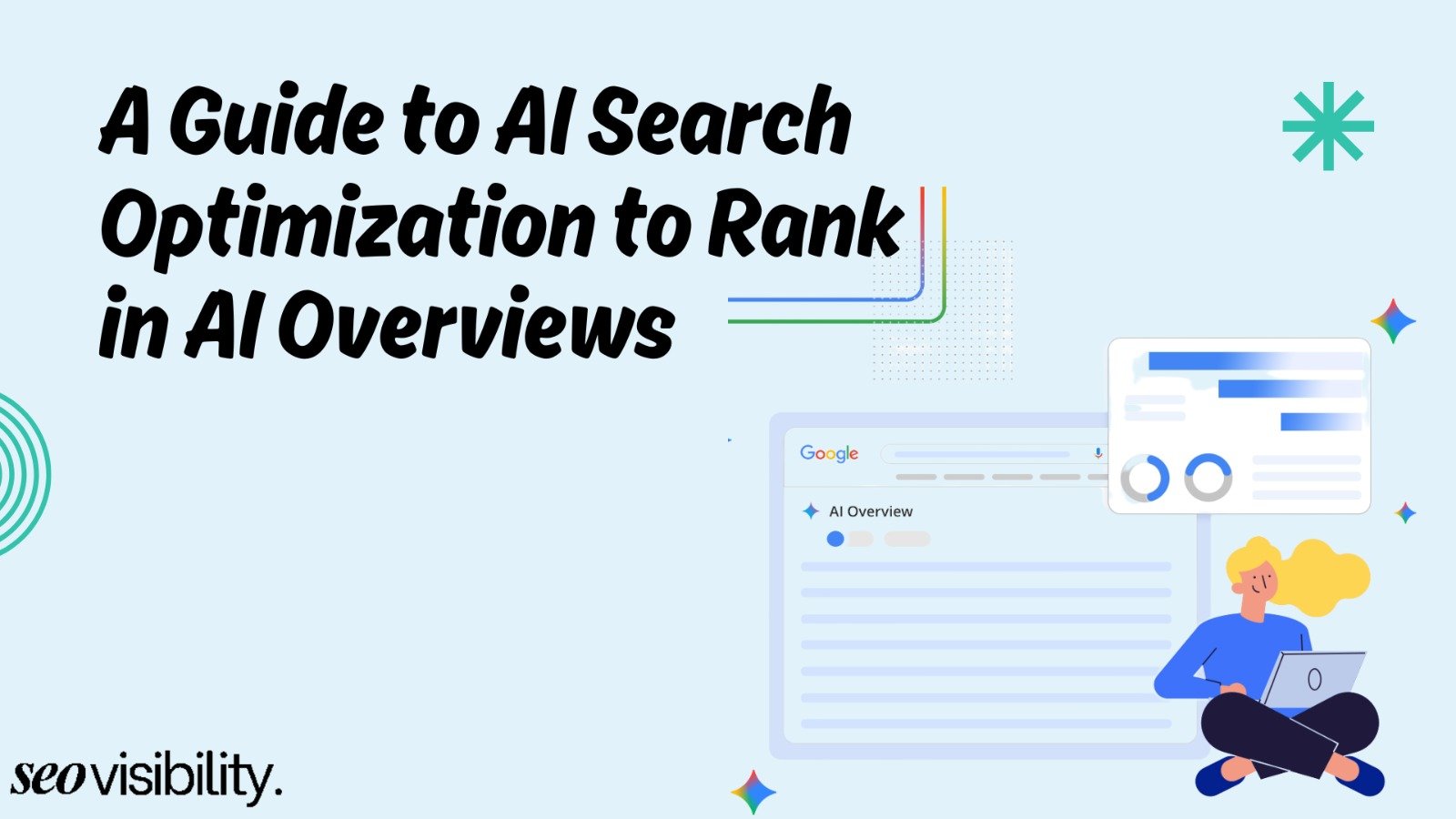
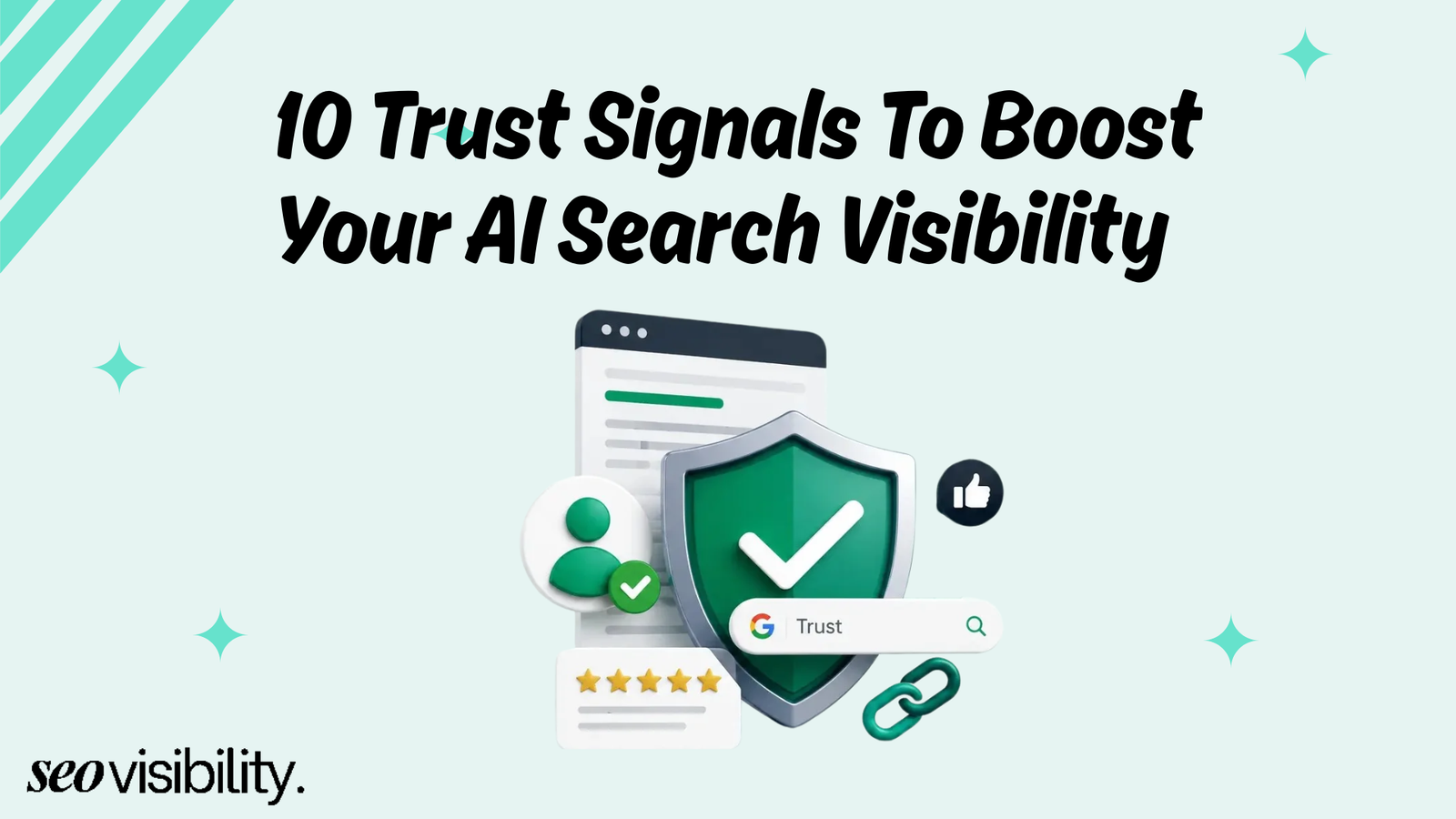
AI search visibility depends on trust signals like first-hand experience, author credibility, entity consistency, original data, and technical SEO. Google AI Overviews and other AI-powered search tools pull answers only from sources they can verify as reliable, so the more trust signals you build, the more often your content gets cited.
If you have noticed your traffic shifting, or your rankings holding steady while clicks drop, you are not imagining it. AI Overviews and AI Mode now sit atop the same core Google ranking systems as traditional search. That means the pages that earn citations inside AI answers are the same pages that already show strong trust signals across the web.
This guide breaks down the ten trust signals that matter most in 2026, why AI systems reward them, and how you can start building these signals today.
Why Trust Signals Matter to Boost AI Search Visibility in 2026
AI Overviews do not crawl the web fresh for every query. They rely on Google’s existing index and rerank content using trust and quality signals baked into the core algorithm.
Recent research backs this up clearly. Pages with strong E-E-A-T signals are roughly 2.3 times more likely to get cited inside AI Overviews than pages sitting in position one without them. Another large-scale benchmark found that E-E-A-T and entity signals explain nearly 96 percent of the variance separating cited sources from ignored ones.
The takeaway is simple. If your content lacks clear trust signals, it will not just rank lower; it will get filtered out of AI answers entirely, no matter how well written it is.
Here is what strong trust signals actually deliver for your brand.
- Stronger trust with both users and Google’s ranking systems
- Better rankings across traditional search and AI-powered results
- More qualified traffic and leads from the right search intent
- Higher brand authority and recognition within your niche
1. First-Hand Experience
Google’s March 2026 core update pushed first-hand experience to the top of the trust signal list for AI Overview inclusion. AI systems specifically look for first-person language like “I tested” or “we found,” along with process documentation and original screenshots.
Generic overviews written from a desk, without any real testing, rank lower than content that shows visible proof of hands-on work. Experience signals now count as the single strongest predictor of AI citability across ChatGPT, Perplexity, and Gemini, not just Google.
To build this signal, run your own tests before you publish. Document specific outcomes, such as exact numbers or before-and-after results, instead of vague claims.
Share your process step by step, and be honest about what did not work. That honesty is what separates real experience from AI-generated filler content that only summarizes what already exists online.
2. Author Credibility
A named author with a real biography carries far more weight than an anonymous byline or a generic “team” credit. Studies show that cross-referenced author credentials increase citation rates by 2.4 times compared to generic bylines.
Your author page needs more than a name and a headshot. It should include specific credentials, links to LinkedIn or other professional profiles, a clear description of the author’s expertise, and a list of other content they have written on your site.
Every content-producing member of your team needs a full biography page, not a short two-line bio. If you run a small operation or work solo, this is even more important since you are the entire brand’s credibility layer.
3. Brand Entity Consistency
AI systems build a picture of your brand as an entity, connecting your business name, website, social profiles, and mentions across the web. When that information does not match everywhere, it creates confusion that weakens every other trust signal you have built.
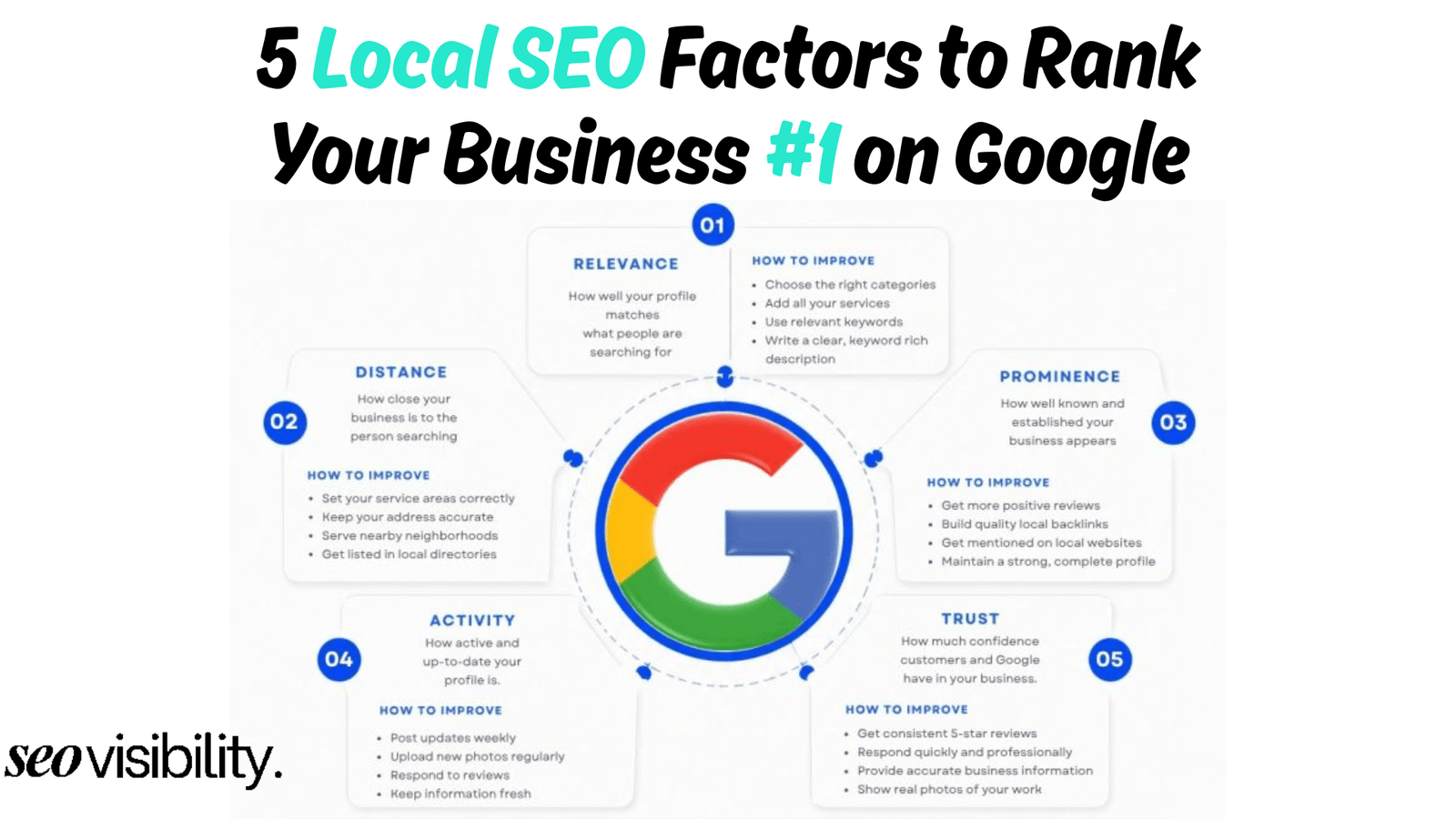
Fixing entity consistency is often the fastest win available to most brands. Align your brand name, logo, contact details, and descriptions across your website, LinkedIn, Google Business Profile, directories, and any press mentions.
Inconsistent NAP data, meaning your name, address, and phone number, is a common problem for local and service-based businesses. Even small differences, like using “SEO Visibility” in one place and “SEO Visibility Co.” in another, can create entity confusion that AI systems struggle to resolve.
4. Original and Research-Backed Content
AI Overviews prefer content with unique data over generic explanations that already exist across hundreds of other pages. If your article says nothing new, there is no reason for an AI system to cite you over a competitor saying the same thing.
Publish your own surveys, case studies, or original analysis whenever possible. Every article should include at least one attributed, quantified claim within the first 200 words, since that is where AI systems tend to pull their citation source from.
Original research also naturally attracts backlinks and mentions, which feeds directly into your authority signals. This is one of the biggest content gaps most competitor pages miss, since they tend to rehash the same generic points instead of adding something new.
5. High-Quality Citations
Referencing authoritative sources shows Google and AI systems that your claims are verifiable rather than invented. Cite primary sources, official documentation, and original studies instead of linking to other blog posts that are themselves summarizing someone else’s work.
This practice also builds trust with readers, who are more likely to act on advice when they can see where the data came from. Link out to high-authority websites that support your points, and always fact-check before publishing rather than after.
Avoid citing content farms or low-quality aggregator sites, since these can actually hurt your credibility rather than help it. Strong citation practices are one of the clearest ways to demonstrate expertise without simply claiming it.
6. Transparent Reviews
Fake reviews might boost your star rating short-term, but they damage trust the moment users or Google notice the pattern. Genuine reviews, including a few critical ones, actually make your brand look more credible, not less.
Collect reviews through legitimate channels like Google Business Profile, Trustpilot, or G2, and display them with proper schema markup so search engines can read them correctly. Respond publicly to feedback, both positive and negative, since this shows real engagement rather than a curated highlight reel.
Google’s guidelines are strict about review manipulation, and getting caught can lead to penalties that hurt your visibility across the board. Transparency here protects your long-term trust signals far more than a perfect five-star average ever could.
7. Technical SEO
Technical SEO forms the foundation that every other trust signal sits on top of. Without it, even the best content struggles to get indexed, crawled, or displayed correctly in AI-powered results.
Your site needs HTTPS across every page and subdomain, fast load times, and a mobile-friendly layout that passes Core Web Vitals. Structured data, including Organization, Person, and FAQPage schema, helps AI systems understand who you are and what your content covers, and pages using FAQPage schema see a notable lift in citation rates.
Strong canonical tags prevent duplicate content issues, while clean site architecture makes it easier for both crawlers and AI systems to find your best content. Accessibility matters too, since a site that works well for all users signals genuine quality rather than a rushed build.
8. User Experience
Google’s ranking systems and AI reranking layers both factor in how real users interact with your content. Clear navigation, readable formatting, and a design that satisfies what the visitor actually searched for all contribute to this signal.
If someone lands on your page and cannot find what they need quickly, they leave, and that bounce signals low quality. Content that answers the question directly, uses clear headings, and breaks information into scannable sections tends to perform better both in traditional rankings and AI citations.
Accessibility improvements, like proper alt text and keyboard navigation, also count here. A site that feels frustrating to use will struggle no matter how strong your written content is.
9. Reputation Signals
Earned mentions, backlinks, and coverage from respected websites tell AI systems that other credible sources vouch for you. This is different from links you build yourself, since AI systems specifically look for organic recognition from third parties.
Media coverage, guest appearances on industry podcasts, speaking engagements, and mentions in publications like Search Engine Journal or Moz all strengthen your authoritativeness. A quick way to check your baseline is searching your brand name alongside major industry publications to see if you show up at all.
Customer testimonials with real names and verifiable details also count as reputation signals, especially when they appear on independent review platforms rather than only your own site. Building this signal takes time, but it compounds, since each piece of coverage makes the next one easier to earn.
10. Content Freshness and Accuracy
AI systems favor content that shows clear evidence of being maintained and updated. A visible last-updated date, a brief note explaining what changed, and accurate “dateModified metadata in your schema all support this signal.
Set a review schedule for your top-performing pages, checking every few months for outdated statistics, broken links, or shifts in your industry that need addressing. Content that sits untouched for years starts to lose citation eligibility even if it once ranked well, since AI systems interpret staleness as a trust risk.
Fixing mistakes openly when they happen also builds trust rather than damaging it. Readers and AI systems both respond better to a brand that corrects errors transparently than one that pretends they never happened.
Comparison of 10 Trust Signals
| Trust Signal | Primary Focus | Fastest Way to Improve |
|---|---|---|
| First-Hand Experience | Original testing and proof | Add screenshots, specific results, and honest limitations |
| Author Credibility | Named expert bylines | Build full author pages with credentials and links |
| Brand Entity Consistency | Uniform identity across the web | Audit and align your name, logo, and contact details |
| Original Research | Unique data and analysis | Publish your own survey or case study |
| High-Quality Citations | Verifiable sourcing | Link to primary sources, not secondary blogs |
| Transparent Reviews | Honest reputation management | Collect real reviews with schema markup |
| Technical SEO | Site infrastructure | Fix HTTPS, speed, schema, and mobile usability |
| User Experience | Visitor satisfaction | Improve navigation and answer intent directly |
| Reputation Signals | Third-party validation | Earn backlinks and press mentions |
| Content Freshness | Ongoing accuracy | Set a review cycle and update visibly |
Build AI Search Visibility That Actually Converts
Trust signals are not a one-time checklist you complete and forget. They compound over time, and the brands that consistently reinforce all ten signals are the ones that show up again and again inside Google AI Overviews and other AI-powered results.
Start with the fastest wins, like fixing entity consistency and adding author credentials, then layer in original research and technical fixes over the following months. Every signal you strengthen makes the next one more effective, since AI systems reward brands that show trust across multiple dimensions rather than just one.
If you want a partner who understands exactly how AI search visibility works in 2026, at SEO Visibility, Khalid Hussain can help. With 15+ years of hands-on SEO experience and a track record of helping 999+ businesses, agencies, and ecommerce stores grow online, Khalid builds the kind of trust-first strategy that gets brands cited, not just ranked.


![How Much Does an SEO Expert Cost in 2026 [SEO Pricing]](https://seovisibility.co/wp-content/uploads/2026/01/how-much-does-an-seo-expert-cost.png)

![SEO Copywriting Checklist [Easy to Follow Guidelines]](https://seovisibility.co/wp-content/uploads/2026/01/seo-copywriting-checklist.png)