Programmatic SEO for SaaS grows your monthly recurring revenue by generating hundreds or thousands of high-intent landing pages that target the exact queries your buyers use when they are ready to sign up, compare options, or switch tools. Instead of trading hours for content, you build a system that scales organic traffic while your team stays focused on product and sales.
If you are a SaaS founder or marketing leader trying to grow revenue without burning budget on paid ads, this guide is for you.
What is Programmatic SEO for SaaS
Programmatic SEO is the practice of using templates and structured data to automatically generate large numbers of landing pages, each one targeting a specific search query. Instead of writing every page by hand, you build a repeatable system.
Every programmatic SEO strategy is built on three core components:
- A keyword pattern – a repeatable search format that can scale, for example, “CRM for [industry].”
- Modifiers (variables) – the elements that change across pages, such as industries, tools, use cases, or competitors
- A structured data source – the information that fills each page and makes it genuinely useful, like integrations, feature sets, pricing comparisons, or customer segments
When these three parts work together, you can create hundreds of unique pages at once without each page feeling thin or templated. The best programmatic pages feel like they were written specifically for that search query because the data behind them is real and relevant.
Why Traditional SaaS SEO Falls Short in 2026
Most SaaS teams are still publishing three to five blog posts per month. These posts target broad, informational keywords and attract readers who are nowhere near ready to buy. Traffic goes up. MRR stays flat.
Here is the problem: buyers do not search for “what is project management software” when they are ready to buy. They search for “Asana vs Monday.com for remote teams” or “best project management tool for agencies.”
These are specific, high-intent queries with commercial signals. A single comparison page ranking for a term like that, even with 200 monthly searches, can outperform a 5,000-visit blog post targeting a broad topic.
Traditional SEO also does not scale well for SaaS companies with rich product data. If your tool has 200 integrations, 50 competitors, and serves 30 different industries, manually writing pages for every combination is not realistic. That is exactly where programmatic SEO for SaaS companies takes over.
| Dimension | Traditional SEO | Programmatic SEO for SaaS |
|---|---|---|
| Scale | 4–12 pages per month | Hundreds to thousands at once |
| Keyword coverage | Selected head terms and a few long-tail | Comprehensive long-tail at scale |
| Content depth | Deep, individually crafted | Structured, template-driven but data-rich |
| Time to results | 6–12 months per cluster | Often 2–4 months per template set |
| Cost per page | 500–2,000 USD per page | Roughly 5–150 USD per page at scale |
| ROI timeline | 6–12 months to break even | Often 2–4 months to break even |
| Best suited for | Thought leadership, head terms | Integrations, comparisons, use cases, verticals |
| Maintenance | Per-page updates | Per-page updates Template and dataset updates at scale |
How Programmatic SEO Directly Grows SaaS Revenue
This is the part most guides skip. They talk about traffic but not about what that traffic actually does for your business.
Programmatic SEO grows SaaS revenue in three specific ways:
1. It captures buyers at the bottom of the funnel
Integration pages, comparison pages, and alternative pages attract visitors who are already in the market. Someone searching “[Your Tool] vs [Competitor]” is at the final stage of their buying decision. They just need help choosing. Pages targeting these queries convert at a 3.8% average rate for high-intent terms, compared to 1.4% for educational content.
2. It creates compounding organic leverage
A single blog post gives you one ranking asset. A programmatic SEO build gives you hundreds or thousands. Zapier’s integration pages account for an estimated 18 to 25% of their total organic traffic. Programmatic SEO is responsible for 30 to 50% of traffic at three of the top 10 B2B SaaS companies. These pages do not just rank for one keyword. They each build topical authority within a cluster.
3. It reduces your customer acquisition cost
Organic visitors sourced through SEO show a 14.6% close rate compared to 8.2% for paid channels. They also show 23-day shorter sales cycles than paid traffic. And according to SaaS benchmarks, organic traffic generates 30 to 50% higher lifetime value with lower churn than paid channels.
This means programmatic SEO is not just a traffic strategy. It is a revenue efficiency strategy.
The 4 Page Types That Actually Drive SaaS Revenue
Not all programmatic pages are equal. The ones that actually grow revenue target queries where the buyer already has intent. Here are the four page types that consistently deliver the best returns for B2B SaaS companies:
Comparison Pages
Template format: [Your Tool] vs [Competitor]
These pages capture buyers in the final evaluation stage. Someone typing “HubSpot vs Pipedrive for small teams” is not browsing. They are deciding. Build one solid template and scale it across every relevant competitor. Even 20 comparison pages, each driving modest traffic, can generate a consistent stream of high-quality leads every month.
Alternative Pages
Template format: [Competitor] alternatives or Best [category] alternatives for [audience]
These pages attract users who are unhappy with their current tool and actively looking to switch. They are some of the highest-converting pages in the entire SaaS content ecosystem. A visitor searching for alternatives to a competitor has already decided to leave. Your job is simply to show up and make the case for your product.
Integration Pages
Template format: [Your Tool] + [Integration] or How to connect [Your Tool] with [Integration]
If your SaaS integrates with other tools, every integration is a keyword opportunity. These pages rank for high-intent queries from users already embedded in those tool ecosystems. Integration pages generate a significant share of Zapier’s organic traffic and show 2.3x higher trial-to-paid conversion rates compared to comparison content.
Use Case and Industry Pages
Template format: [Your Tool] for [Industry] or [Your Tool] for [Job Title]
A CRM platform can create pages targeting sales managers, recruiters, real estate agents, and dozens of other roles, each page using tailored copy and relevant use cases. These pages capture vertical search intent with low competition and high purchase probability.
A Comparison of Programmatic SEO Page Types by Revenue Impact
| Page Type | Search Intent | Avg. Conversion Rate | Volume Potential | Time to Index |
|---|---|---|---|---|
| Comparison (vs) pages | Decision stage | 3.8% | 20-200 pages | 2-4 weeks |
| Alternative pages | Switching intent | 3.5%+ | 20-100 pages | 2-4 weeks |
| Integration pages | Tool ecosystem | 2.3x vs avg | 100-8,000 pages | 3-6 weeks |
| Use case/industry pages | Vertical intent | High | 50-500 pages | 3-5 weeks |
| Feature/template pages | JTBD intent | Moderate-High | 100-1,000 pages | 3-6 weeks |
The SaaS Programmatic SEO Strategy: Step by Step
Here is a practical programmatic SEO strategy to drive more customers, subscriptions, and revenue.
Step 1 – Find Your Keyword Patterns
Start by identifying repeatable search patterns in your niche. Look for queries with a consistent structure where only one or two variables change. For most SaaS products, the best starting patterns come from:
Start by identifying repeatable search patterns in your niche. Look for queries with a consistent structure where only one or two variables change. For most SaaS products, the best starting patterns come from:
- Competitor names and alternatives
- Integrations and connected tools
- Industries or job roles that use your product
- Features or use cases your tool supports
- Templates, workflows, or outcomes your product enables
For each pattern, generate 20 to 50 variations by swapping in the relevant modifiers. Filter for monthly search volume above 50 and keyword difficulty below 40, unless your domain authority already supports tougher terms.
Some of the best high-intent keyword patterns for SaaS include:
- “[Competitor] alternatives”
- “[Competitor] vs [Your product]”
- “[Your tool] + [Partner tool] integration”
- “[Product] pricing” or “[Product] pricing for [team size]”
- “[Feature] tool for [use case]”
- “[Category] for [industry]”
- “[Tool] for [role]”
- “How to [specific workflow]” where your product is the solution
- “[Template type] template for [use case]”
- “[Product] reviews” or “is [product] worth it”
- “Best way to [outcome]” that your product enables
Step 2 – Build Your Data Foundation
Programmatic SEO needs data, not filler. Your data might come from your product database, integration documentation, pricing information, customer segments, or competitive research. The cleaner and more structured your data, the better each page performs.
Each page needs to answer a specific question with specific information. A comparison page that says “Tool A has more features” is not useful. A page that lists exact feature differences, pricing tiers, and use-case fit is genuinely helpful to the searcher and ranks accordingly.
Step 3 – Design Templates Built Around Intent
A template is not a shortcut to thin content. It is a structure that ensures every page delivers the same quality of experience regardless of which variable is plugged in. For each page type, your template should include:
- A headline that incorporates the target keyword naturally
- An introduction that directly addresses the search intent
- Data-driven content that is unique to that page (features, specs, comparisons, use cases)
- Social proof or customer signals where appropriate
- A clear, specific call-to-action tied to the page intent
A comparison page CTA should push toward a free trial or demo. An integration page CTA should link to your integration setup documentation. Match the CTA to the stage the buyer is at.
Step 4 – Implement Solid Technical SEO
Programmatic SEO at scale requires clean technical execution. Each generated page needs:
- A unique, descriptive URL (not just a parameter string)
- Optimized title tags and meta descriptions with natural keyword inclusion
- Proper heading hierarchy (H1, H2, H3)
- Structured internal linking back to your core product pages and category hubs
- Schema markup where relevant
- Fast load times and mobile optimization
Google has become very good at detecting low-quality programmatic content. Pages need to pass the test of whether a real person would find them valuable. Thin pages with recycled copy will hurt your domain authority, not help it.
Step 5 – Build Internal Linking That Connects to Revenue
Your programmatic pages should not live in isolation. Link them into your core site architecture so that authority flows toward your product pages, trial pages, and conversion points. A strong internal linking structure also helps Google understand how your pages relate to each other, which improves your rankings across the entire cluster.
Comparison pages should link to your pricing page. Integration pages should link to your feature pages. Industry pages should link to relevant case studies. Every programmatic page is a traffic asset and a conversion funnel in one.
Step 6 – Launch, Measure, and Scale What Works
Start with a batch of 50 to 100 pages. Monitor indexing rates, click-through rates, and most importantly, conversion data. Identify which page types and keyword patterns are driving signups and MRR, not just sessions.
A well-targeted programmatic build at a SaaS company converts organic sessions to a qualified pipeline at 0.4 to 1.2%. If your numbers are below that range, the issue is usually intent mismatch, weak templates, or missing conversion elements. Fix those before scaling.
Once your top-performing page types are proven, scale. Expect 40 to 70% of pages to be indexed within 30 days of submission, and meaningful MRR contribution within four to eight months.
Real Results: What Programmatic SEO Actually Delivers
The data on SaaS programmatic SEO in 2026 is compelling. Here is what companies using this approach are seeing:
- One B2B SaaS team grew from 8,000 monthly organic visitors to 258,000 in 14 months, generating 6,240 signups per month and an 788% ROI in year one
- A SaaS case study recorded a 3,035% increase in signups using targeted programmatic pages
- Cleanvoice achieved a 300% increase in MRR within six months through SEO-driven organic growth
- Instatus saw 1,500% growth in organic traffic and 833% growth in MRR over the past two years
- Zapier’s 50,000+ programmatic pages drive an estimated 5.8 million monthly sessions and rank for 3.6 million keywords
- Across B2B SaaS implementations, the average ROI for programmatic SEO is 340%, with a median annual revenue increase of $2.8 million per company
Programmatic SEO at scale generates results that no traditional blog content strategy can match at the same cost. The average cost per programmatic page is $5 to $50 (template plus automation), compared to $500 to $2,000 for a manually written piece. That cost difference compounds over thousands of pages.
Common Programmatic SEO Mistakes in SaaS
Here are some common programmatic SEO mistakes to avoid in Saas business.
Publishing thin pages with no real data. If every page says the same thing with the modifier swapped in, Google will detect the pattern and suppress rankings. Every page needs to deliver something specific, whether that is a real feature comparison, actual integration steps, or use-case-specific copy.
Ignoring search intent. An integration page that does not explain how to use the integration has failed its visitor. A comparison page that only promotes your product instead of giving an honest comparison loses trust. Match the content to what the searcher actually wants to know.
Scaling before validating. Launching 10,000 pages before you know which patterns work is how companies create crawl budget problems and index bloat. Start with a controlled batch, prove the model, then scale.
Long-Tail SEO for SaaS: Why Low Volume Keywords Win
One of the biggest misunderstandings in B2B SaaS SEO is chasing high-volume keywords. A keyword with 1,000 monthly searches might drive 100 visitors at a 2% conversion rate, giving you 2 MQLs. A cluster of 50 long-tail keywords, each with 100 searches, can drive the same raw traffic with conversion rates of 3 to 5%, generating 3 to 5 times the pipeline.
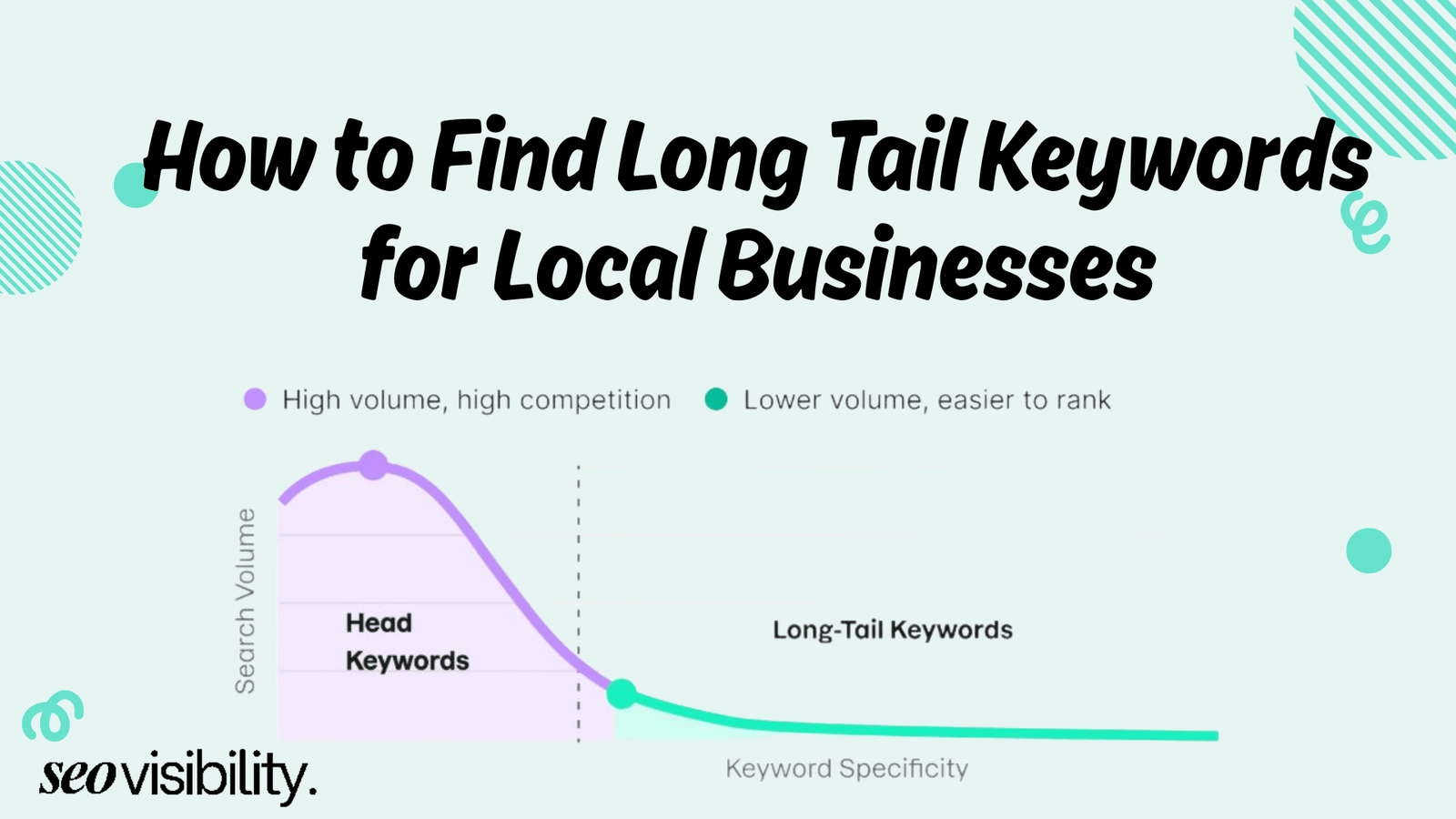
Long-tail keywords convert at an average rate of 36% higher than broad head terms. They also face less competition, meaning you can rank faster and at a lower domain authority. For a SaaS startup or scale-up without years of authority built up, long-tail programmatic SEO is often the fastest path to real MRR growth.
The compound effect is what makes this so powerful. Each new page you add targets a specific query, builds your topical authority, and sends signals to Google that you are the most relevant resource in your category. Over 12 to 18 months, this creates a content moat that paid ads cannot replicate.
Aligning Programmatic SEO with Your SaaS MRR Goals
Most SaaS teams measure SEO success by traffic. That is the wrong metric. The right metrics are:
- Organic-influenced MRR: Monthly recurring revenue from customers who first found you through organic search
- Trial start rate from organic: What percentage of your organic visitors start a free trial or request a demo
- Organic pipeline influenced: Trials generated multiplied by trial-to-paid rate multiplied by average contract value
- Cost per organic acquisition: What you invest in your programmatic SEO build, divided by paying customers acquired
Build a dashboard that shows the organic pipeline influenced and the organic pipeline closed. This ties your SaaS organic growth directly to business outcomes and helps you justify continued investment in programmatic SEO as a growth channel.
SEO-sourced visitors close at a 14.6% rate compared to 8.2% for paid. They have shorter sales cycles and higher lifetime value. When you measure it properly, programmatic SEO for SaaS companies is one of the highest-ROI growth investments available.
The SaaS (Monthly Recurring Revenue) Growth Formula with Programmatic SEO
Think of programmatic SEO as a revenue system, not just a traffic strategy.
For example, imagine:
- 10,000 monthly organic visitors from pSEO pages
- 2 percent trial signup rate
- 10 percent trial-to-paid conversion
- 200$ average MRR per customer
That is 200 trials, 20 new customers, and 4,000$ in new MRR per month from one programmatic system once it matures. Scale that to 50,000 visitors, and the numbers add up quickly.
Paid acquisition usually gets more expensive over time. Organic acquisition gets cheaper as your content continues to rank and compound. That is why long-term ROI for SEO significantly outperforms most paid channels in SaaS.
Programmatic SEO Vs Paid Ads for SaaS Growth (Comparison)
| Growth Channel | Avg. Close Rate | CAC Trend | Long-Term Value | Scales Without… |
|---|---|---|---|---|
| Programmatic SEO | 14.6% | Decreasing over time | High – compounds | More ad budget |
| Google Ads / PPC | 8.2% | Increasing over time | Low – stops when paused | More spend |
| Manual Blog Content | Variable | Moderate | Moderate | Scaling headcount |
| Paid Social | 6-7% | Rising CPMs | Low – stops when paused | More budget |
The fundamental difference is that paid ads stop the moment you stop spending. Programmatic SEO assets compound. A comparison page you publish today still drives signups two years from now, with no recurring cost attached.
Start Building Your Organic Revenue Engine Today
Programmatic SEO for SaaS is not a future strategy. It is already the primary organic growth channel for some of the largest B2B SaaS companies in the world. Zapier, HubSpot, Notion, and Asana all use it at scale. The question is not whether it works. The question is whether your SaaS will build this system before your competitors do.
The companies winning at programmatic SEO right now share the same traits: they identified large keyword sets with high-intent modifiers, built templates around real search intent, used structured data to make each page genuinely useful, and scaled only after proving their core patterns converted.
If you are a SaaS founder or marketing leader who wants to stop relying on paid acquisition and build an organic revenue engine that compounds every month, programmatic SEO is the answer.
Khalid Hussain is a programmatic SEO expert and top-rated SEO partner with 15+ years of experience, having helped 100+ SaaS companies grow revenue through organic search.
If you are ready to build a programmatic SEO strategy that drives real MRR growth for your SaaS, contact me and let’s build your system together.


![How Much Does an SEO Expert Cost in 2026 [SEO Pricing]](https://seovisibility.co/wp-content/uploads/2026/01/how-much-does-an-seo-expert-cost.png)

![SEO Copywriting Checklist [Easy to Follow Guidelines]](https://seovisibility.co/wp-content/uploads/2026/01/seo-copywriting-checklist.png)