Google processes over 8.5 billion searches per day. And the way it understands those searches has changed. It no longer matches words on a page to words in a query. It understands meaning, context, relationships between concepts, and what the searcher actually needs.
That shift means the types of keywords you target and how you use them matter more than ever. Understanding the different types of keywords in SEO is no longer optional. It’s the foundation of any strategy that actually works.
In this guide, I’m breaking down 11 types of SEO keywords that actually help you rank, attract the right traffic, and grow your business in 2026.
1. Latent Semantic Indexing (LSI) Keywords
LSI keywords are terms that frequently appear alongside your main keyword in top-ranking content. They help search engines confirm what your page is really about.
Now, there’s a debate around this term. Google’s John Mueller has said that “LSI keywords” as a ranking concept don’t exist in Google’s algorithm. The original LSI technology dates back to the 1980s and isn’t what modern search engines use.
But here’s what matters for you: the underlying idea still works. When you write about a topic and naturally include closely related terms, search engines get a stronger signal about your content’s relevance. That’s the practical takeaway.
For example, if your main keyword is “email marketing,” LSI-related terms might include:
- Open rate
- Email automation
- Drip campaigns
- Subscriber list
- Click-through rate
These aren’t synonyms. They’re terms that naturally appear in content about email marketing. Including them shows search engines that your page covers the topic thoroughly, not just superficially.
How to use Latent Semantic Indexing (LSI) Keywords:
- Search your target keyword on Google and open the top 5 ranking pages.
- Read each page and note the common terms they all use.
- Make a list of those recurring terms.
- Weave them naturally into your headings, body text, and image alt tags.
- Focus on adding depth to your content, not on keyword stuffing.
2. Semantic Keywords
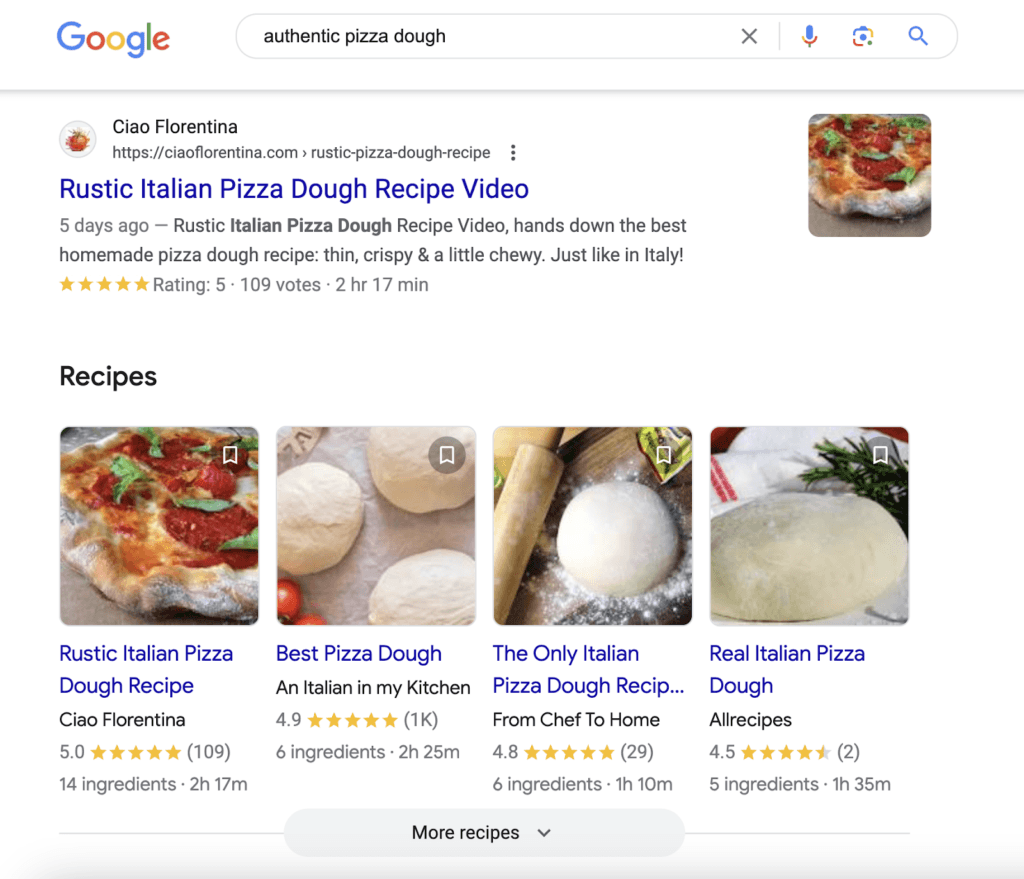
Semantic keywords are words and phrases that share a conceptual relationship with your primary keyword. They go deeper than LSI keywords because they focus on meaning and user intent, not just co-occurrence.
Think of it this way. LSI keywords are terms that often appear together in the same content. Semantic keywords are terms that help search engines understand the full meaning behind your topic.
Google’s BERT and MUM algorithms use natural language processing to interpret the context of a search query. When your content includes semantically connected terms, these systems can better match your page to what the user actually needs.
If your primary keyword is “content marketing strategy,” semantic keywords might include:
- Editorial calendar
- Audience personas
- Distribution channels
- Content funnel
- Brand storytelling
These terms aren’t just “related.” They represent different dimensions of the same topic. Together, they signal to Google that your content provides comprehensive coverage.
How to use Semantic keywords:
- Map out all the subtopics, questions, and concepts your audience would expect to find under your primary keyword.
- Check Google’s “People Also Ask” section for related questions.
- Review the related searches at the bottom of the SERP for additional angles.
- Build your content around the full topic, not just the keyword.
- Cover each subtopic naturally so your page reads as a comprehensive resource.
3. Entity-Based Keywords
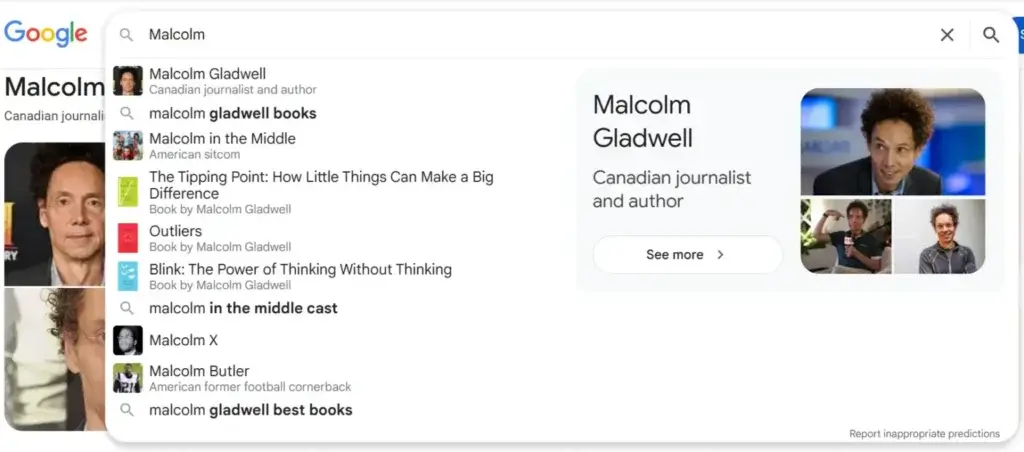
Entity-based keywords revolve around specific, identifiable things: people, places, brands, products, organizations, or concepts that Google recognizes as distinct entities in its Knowledge Graph.
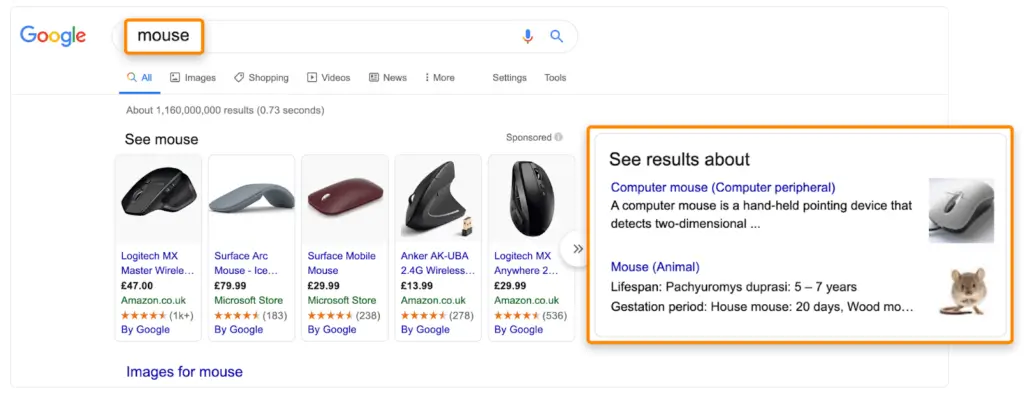
This is where SEO in 2026 gets interesting. Google no longer matches text strings. It connects entities and their relationships. When you search “Tesla,” Google knows you might mean the car company, the inventor, or the stock. It uses context and entity relationships to deliver the right results.
Here are some examples of entity-based keywords:
- HubSpot CRM features
- Yoast SEO plugin
- Google Search Console errors
- Shopify vs WooCommerce
- Neil Patel SEO tips
Each of these keywords is anchored to a known entity. And content that clearly references and connects to recognized entities tends to perform better in search, AI Overviews, and knowledge panels.
How to use Entity-based keywords:
- Mention relevant entities (brands, tools, people, places) by name in your content.
- Link to authoritative sources when referencing those entities.
- Add structured data (schema markup) to help search engines confirm the entities on your page.
- List your business on Google Business Profile and relevant directories to strengthen your own entity presence.
- Connect related entities within your content to show how concepts relate to each other.
4. Contextual Keywords
Contextual keywords are terms that establish the specific context or setting of your content. They help search engines understand the “who, where, when, and why” behind your topic.
Without contextual keywords, your content could be relevant to multiple audiences or situations. With them, search engines can match your page to the exact audience looking for that information.
For example, the keyword “marketing tips” is vague. But add contextual keywords, and it becomes much more targeted:
- Marketing tips for SaaS startups
- Social media marketing tips for restaurants
- B2B marketing tips for small teams
- Holiday marketing tips for e-commerce
- Marketing tips for real estate agents
The contextual part (the industry, audience, or situation) narrows the focus and helps your page rank for specific, high-intent searches that broader pages miss.
How to use Contextual keywords:
- Identify the specific audience, industry, or use case your content serves.
- Add that context into your title and H1 tag.
- Reinforce it in your headings, introduction, and body copy.
- Use contextual terms in your meta description to improve click-through rates.
- Apply this approach to service pages, niche blog posts, and landing pages where you want to attract a very specific reader.
5. Topical Keywords
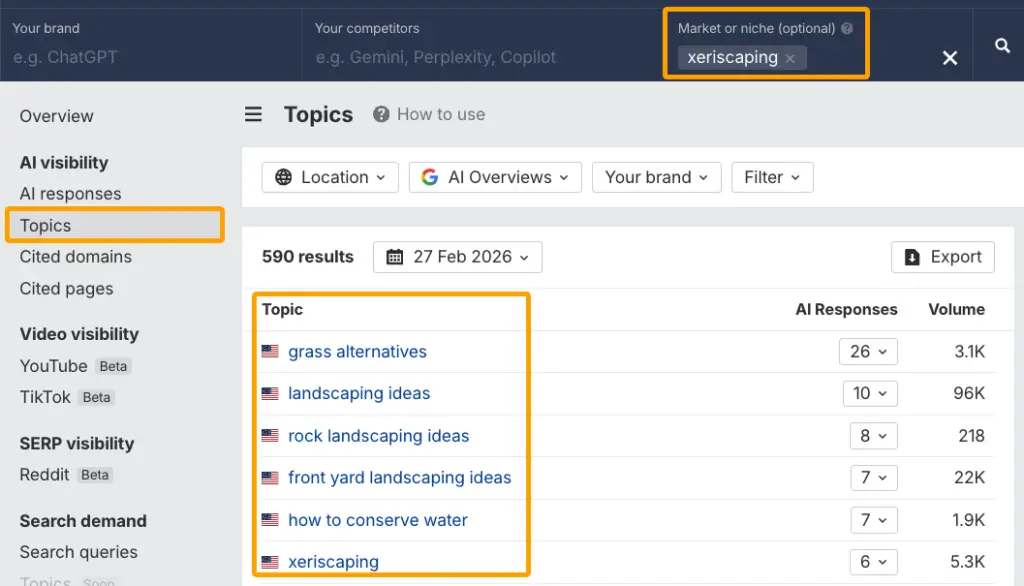
Topical keywords are terms connected to a broader subject area that help you build authority through topic clusters. Instead of targeting isolated keywords, topical keywords help you cover an entire subject from multiple angles.
Search engines in 2026 reward sites that demonstrate deep expertise on a subject. That’s what topical authority means. And you build it by creating content around a cluster of related topical keywords, all linked together.
For the core topic “SEO,” topical keywords might include:
- On-page SEO techniques
- Technical SEO audit
- Link building strategies
- Keyword research process
- SEO for e-commerce sites
Each of these could be its own page or blog post, forming a cluster around the main topic. When these pages are interlinked and comprehensive, search engines see your site as an authority on SEO.
How to use Topical keywords:
- Start with a pillar page that covers a broad topic at a high level.
- Create supporting pages that go deep on individual subtopics.
- Link every supporting page back to the pillar page.
- Link between supporting pages where the topics naturally connect.
- Use descriptive anchor text that tells readers and search engines what the linked page is about.
6. Question Keywords
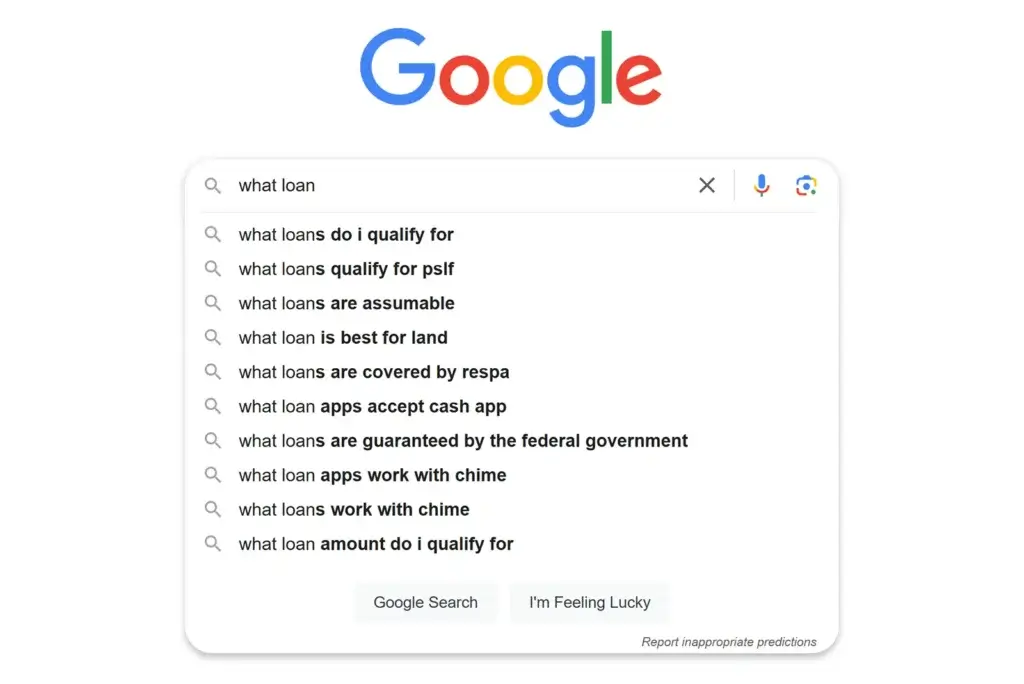
Question keywords are search queries phrased as direct questions. They typically start with “how,” “what,” “why,” “when,” “where,” or “can.”
These keywords have become significantly more valuable in 2026. About 41% of voice search answers come from featured snippets. And AI Overviews pull directly from content that answers questions clearly and concisely. If your content answers a specific question better than anyone else, you have a strong shot at appearing in both.
Examples of question keywords:
- How do I improve my website speed?
- What is the best CRM for a small business?
- Why is my site not ranking on Google?
- When should I redesign my website?
- How much does SEO cost in 2026?
Question keywords also tend to reveal clear search intent. “What is SEO?” is informational. “How much does SEO cost?” is a commercial. Matching your content format to the intent behind the question is what separates pages that rank from pages that don’t.
How to use Question keywords:
- Use question keywords as H2 or H3 headings in your blog posts.
- Answer the question directly in the first 40-60 words below the heading.
- Expand with details, examples, and supporting context after the direct answer.
- Build dedicated FAQ sections on your service and product pages using real questions from your audience.
- Check Google’s “People Also Ask” and your support inbox for questions your audience is actually asking.
7. Keyword Modifiers
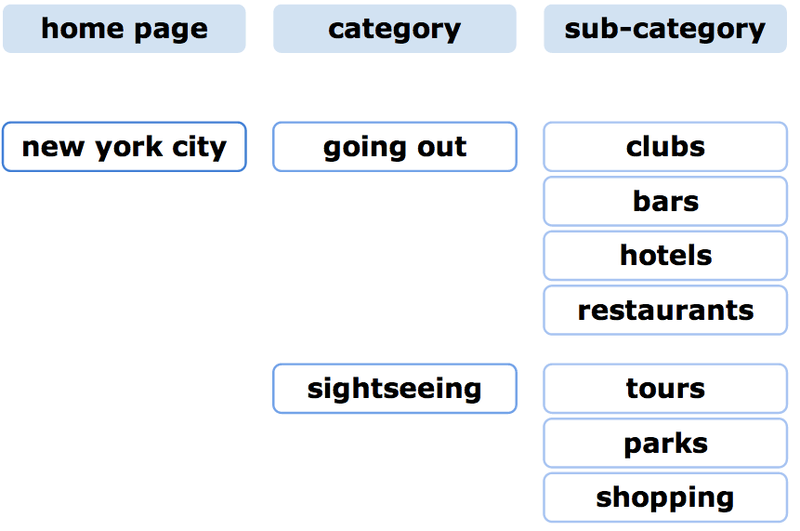
Keyword modifiers are extra words added to a base keyword that change its intent, specificity, or audience. They’re the difference between a broad, competitive keyword and a targeted one that actually converts.
Modifiers fall into a few common categories:
Quality/comparison modifiers: best, top, vs, review, comparison
Price modifiers: cheap, affordable, free, under $100, budget
Time modifiers: 2026, this year, today, latest, new
Intent modifiers: buy, hire, download, near me, for beginners
Audience modifiers: for small businesses, for beginners, for women, for freelancers
Here are some full examples:
- Best project management tools for remote teams
- Affordable SEO services for startups
- Top email marketing platforms 2026
- Free keyword research tools for beginners
- Hire a freelance web developer
Modifier keywords are gold for driving qualified traffic. Someone searching “email marketing software” is browsing. Someone searching “best email marketing software for ecommerce under $50/month” is ready to make a decision.
How to use Modifier keywords:
- Add relevant modifiers to your page titles, H1 tags, and meta descriptions.
- Create dedicated pages or sections targeting high-value modifier combinations.
- For e-commerce, use modifiers in product category pages and filter URLs.
- For service businesses, work modifiers into landing page headlines.
- Test different modifier combinations in your content to capture searchers at different stages of the buying process.
8. Branded Keywords
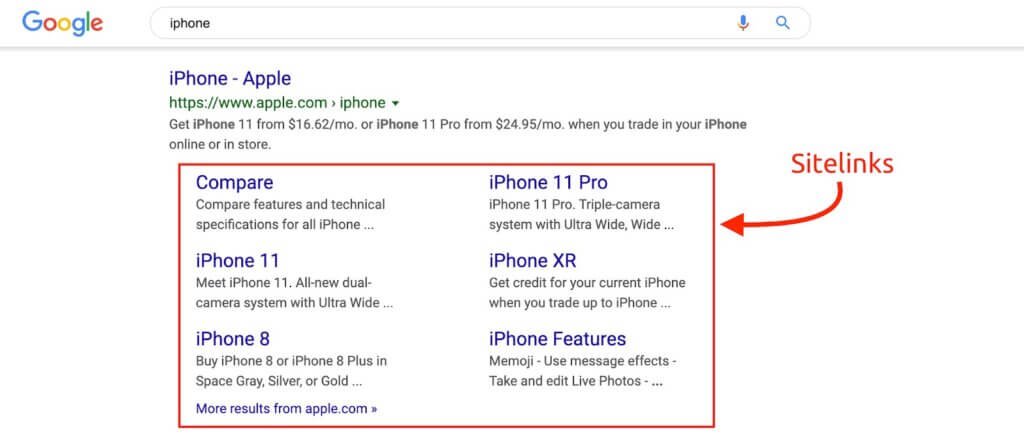
Branded keywords include a specific company name, product name, or brand term. They signal that the searcher already knows the brand and is looking for something specific about it.
These keywords might seem obvious, but many businesses completely overlook them. If someone searches your brand name and finds a competitor’s comparison page instead of your own site, that’s a problem.
Examples of branded keywords:
- Mailchimp pricing plans
- Shopify free themes
- Ahrefs vs SEMrush
- HubSpot CRM demo
- Nike running shoes review
For your own brand, branded keywords include your company name, product names, founder names, or any unique terms associated with your business.
How to use Branded keywords:
- Create dedicated pages for your brand’s most-searched branded queries (pricing, features, demos).
- Build comparison pages that position your brand against competitors.
- Publish pages that address common questions about your product or service.
- Monitor branded keyword performance in Google Search Console.
- If competitors are ranking for your brand terms, create stronger content to defend those positions.
9. Intent-Based Keywords
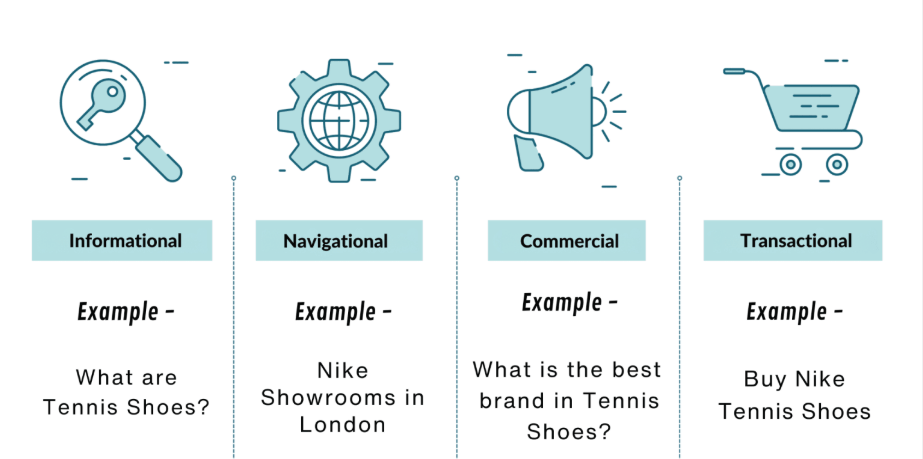
Intent-based keywords are classified by the goal behind the search. Every search query falls into one of four intent categories, and understanding these categories is fundamental to ranking well.
Informational intent: The user wants to learn something.
- What is on-page SEO
- How to start a blog
- Benefits of email marketing
Commercial intent: The user is researching options before a decision.
- Best laptops for college students 2026
- Semrush vs Moz comparison
- Top-rated CRM software
Transactional intent: The user is ready to take action.
- Buy running shoes online
- Hire an SEO consultant
- Download a free invoice template
Navigational intent: The user wants to reach a specific website or page.
- Gmail login
- Shopify admin dashboard
- YouTube Studio
How to use Intent-based keywords:
- Search your target keyword on Google before creating any page.
- Study what types of pages are ranking (blog posts, product pages, guides, videos).
- Match your content format to what’s already working for that intent.
- Make your page more comprehensive, more current, and more useful than the top results.
- Revisit your existing pages and realign them if the content format doesn’t match the intent behind their target keyword.
10. Long-Tail Keywords
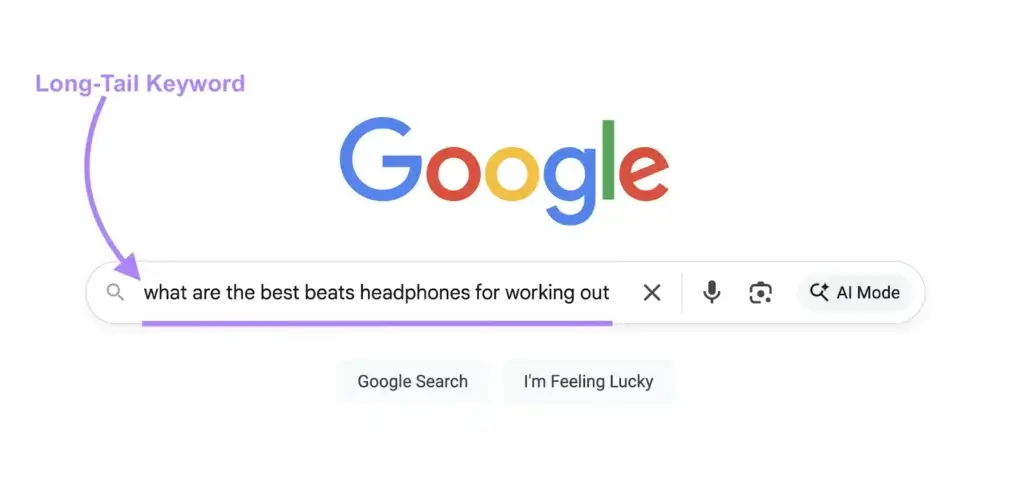
Long-tail keywords are specific, multi-word search phrases that target a narrow topic. They typically get less search volume individually, but they convert at much higher rates because the intent is crystal clear.
The data backs this up. Long-tail keywords have a conversion rate roughly 2.5 times higher than short, generic keywords. One-word keywords convert at just 0.17%, while four-word phrases hit 1.61%.
And here’s the 2026 angle: with Google’s AI Overviews answering broad, simple questions directly in search results, long-tail keywords are where organic clicks still happen. Google can summarize “what is SEO” in an AI box. But a search like “how to do SEO for a new e-commerce store on Shopify” still needs a detailed, experience-based answer that sends the user to your page.
Examples of long-tail keywords:
- Best running shoes for flat feet under $100
- How to write product descriptions that sell on Etsy
- Free keyword research tools for beginners 2026
- Email marketing automation for small ecommerce stores
- How to fix crawl errors in Google Search Console
How to use Long-tail keywords:
- Use long-tail keywords as the primary target for blog posts, FAQ pages, and niche landing pages.
- Build keyword clusters where a pillar page targets a broader term.
- Create supporting pages that target specific long-tail variations of that broader term.
- Interlink these pages to capture traffic across dozens of related searches.
- Pull long-tail ideas from customer questions, support tickets, and Google’s autocomplete suggestions.
11. Local Keywords
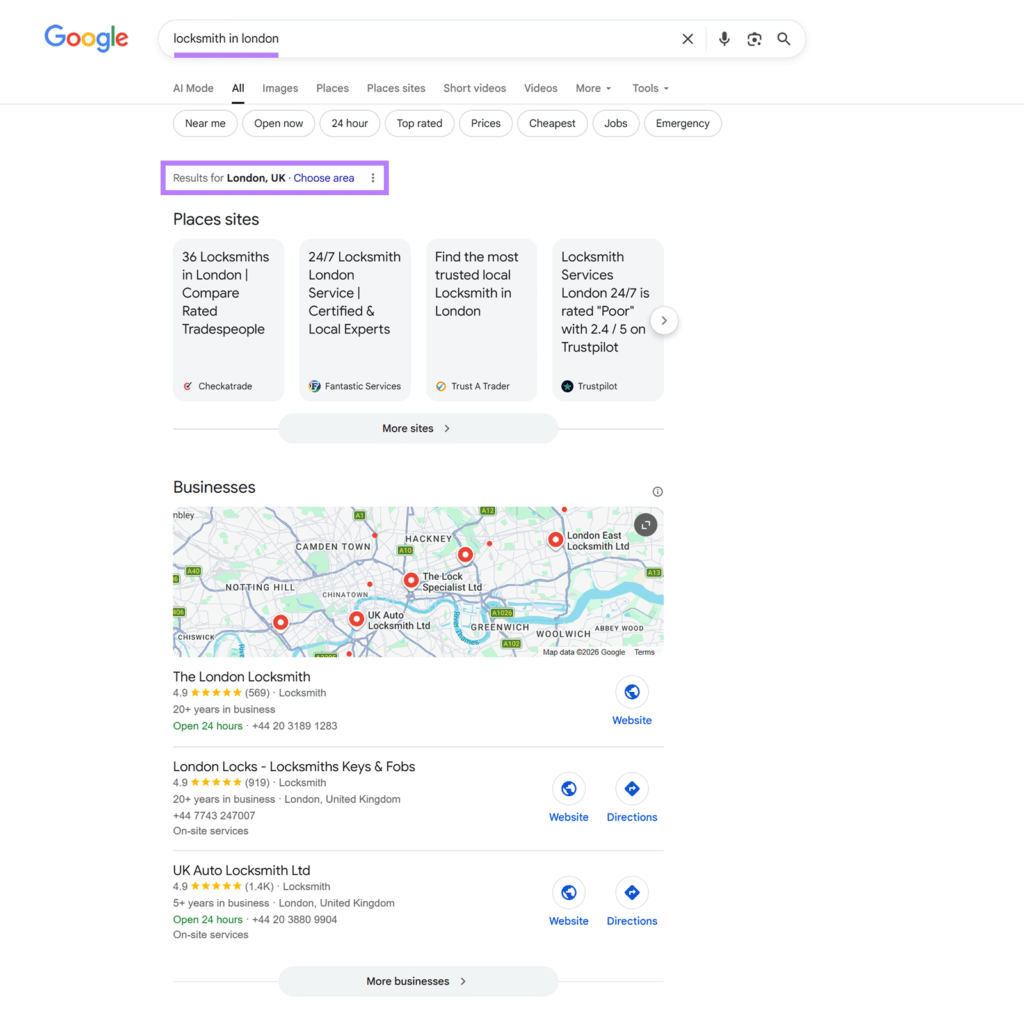
Local keywords include a location element, whether it’s a city name, neighborhood, “near me,” or any location-specific term. They’re essential for any business that serves customers in a specific area.
Local search is massive. 46% of people regularly include “near me” in their searches, and 88% of consumers who do a local search on their phone visit or call that business within 24 hours. Four out of five local mobile searches lead to a purchase.
Examples of local keywords:
- Plumber in Austin, Texas
- Best coffee shops in downtown Chicago
- SEO agency near me
- Wedding photographer San Francisco
- Dentist accepting new patients in Brooklyn
Local keywords don’t just apply to brick-and-mortar shops. Freelancers, consultants, agencies, and service-based businesses all benefit from ranking for location-specific searches. Even if you serve clients nationally, targeting local keywords for your primary market builds trust and drives high-converting leads.
How to use Local keywords:
- Optimize your Google Business Profile with accurate information, categories, and service descriptions.
- Create location-specific landing pages if you serve multiple cities or regions.
- Include local keywords in your page titles, meta descriptions, headings, and body content.
- Earn reviews that mention specific services and locations.
- Add LocalBusiness schema markup to give search engines clear data about where you operate.
A Simple Framework to Build a Keyword Strategy That Ranks and Converts in 2026
Whether you run a blog, manage an e-commerce store, lead a marketing team, or handle SEO for clients, the breakdown below gives you a clear, practical framework you can use today.
Here’s a quick framework you can use today:
- Use LSI and semantic keywords to build topical depth on every page you publish.
- Target entity-based and contextual keywords to help search engines understand exactly what your content covers and who it’s for.
- Build topic clusters around topical keywords to establish authority on subjects that matter to your business.
- Create content that answers question keywords directly to capture featured snippets and voice search traffic.
- Add modifier keywords to your titles and headings to attract qualified, conversion-ready visitors.
- Protect and strengthen your branded keywords, so you control the narrative when people search for you.
- Map every page to a clear intent-based keyword so Google knows exactly what type of result your page is.
- Target long-tail keywords to capture specific searches that broader pages miss, especially in an AI Overview landscape.
- Invest in local keywords if you serve customers in specific areas, because local search drives some of the highest conversion rates in SEO.


![How Much Does an SEO Expert Cost in 2026 [SEO Pricing]](https://seovisibility.co/wp-content/uploads/2026/01/how-much-does-an-seo-expert-cost.png)