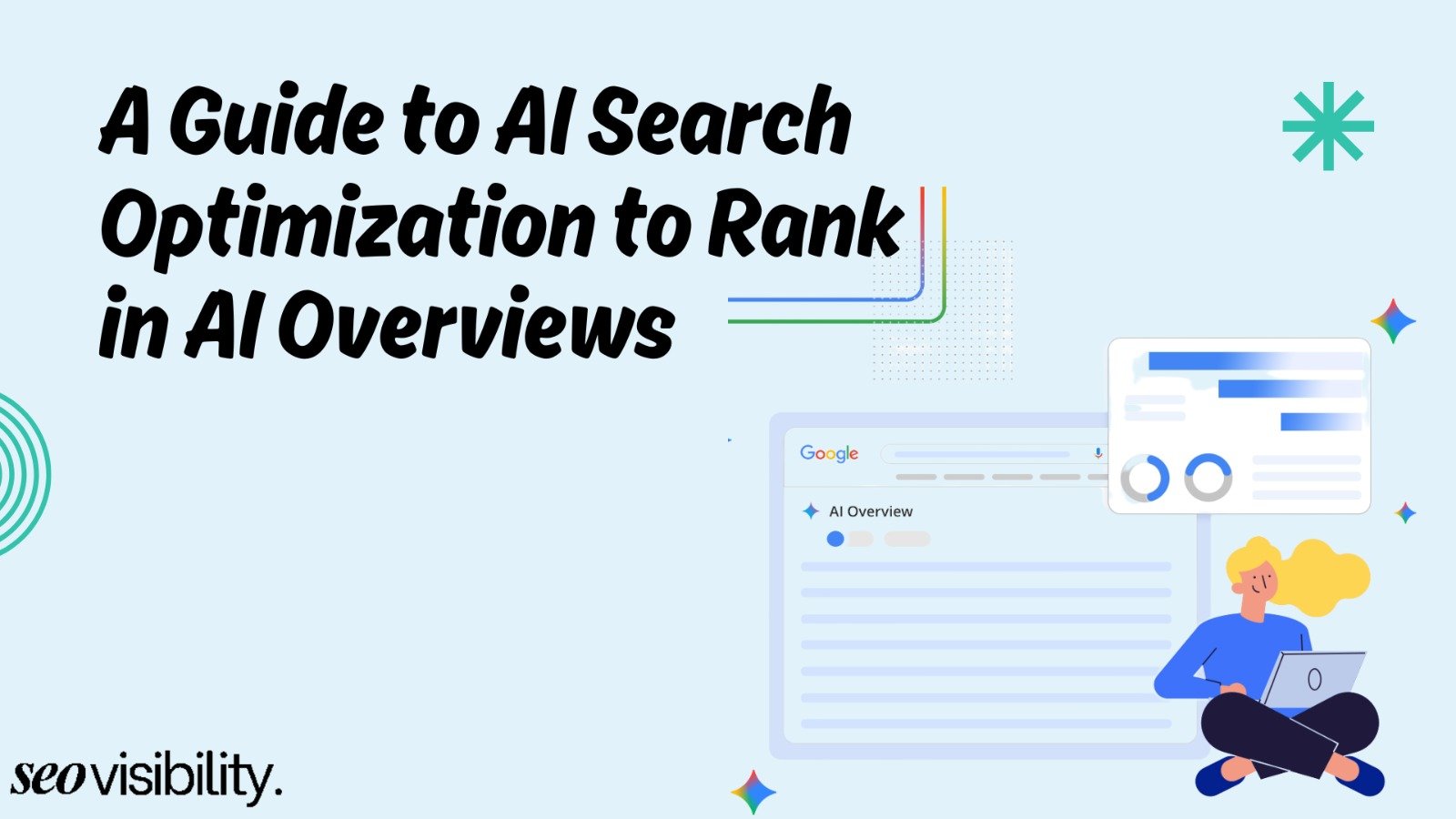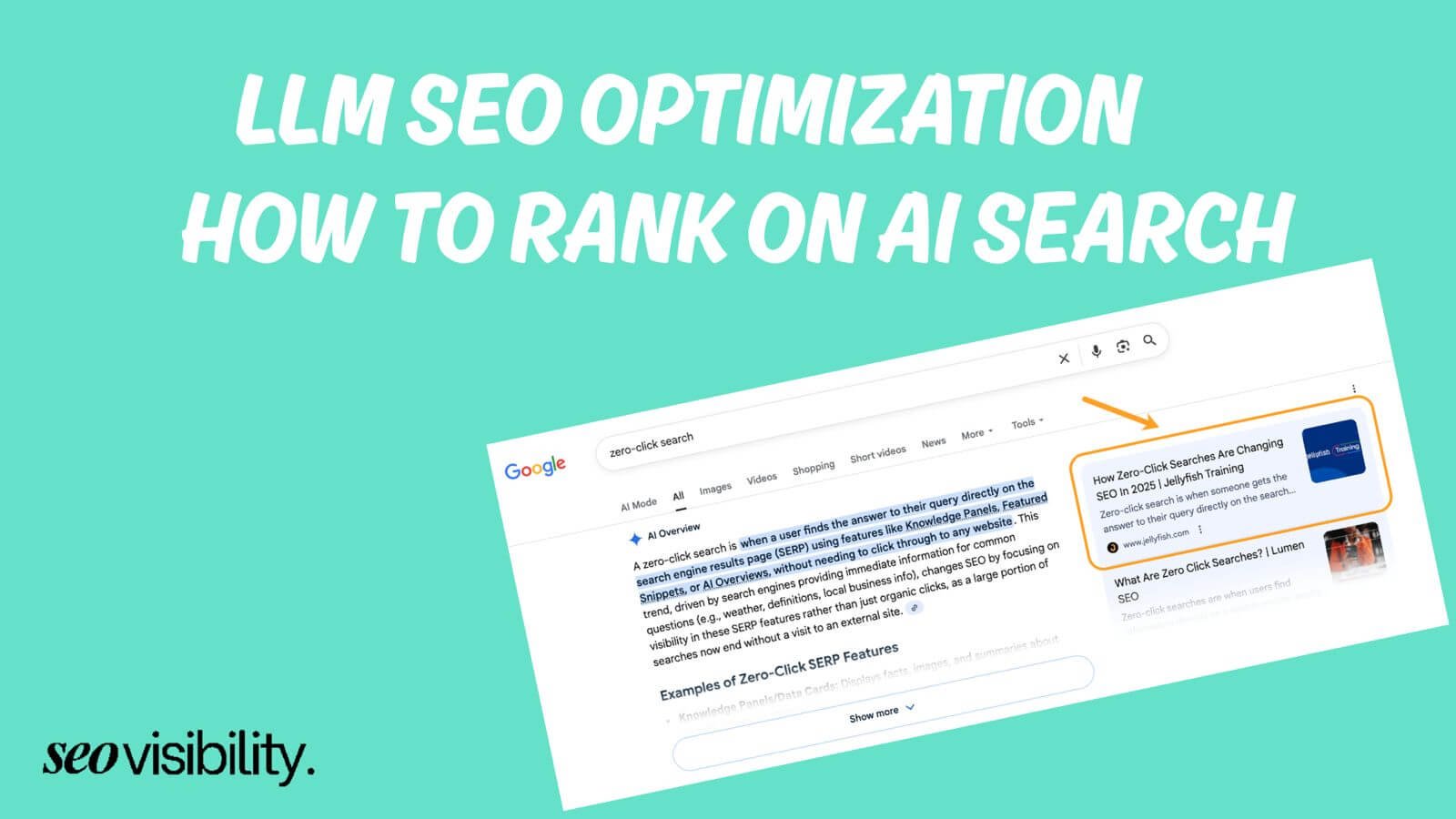
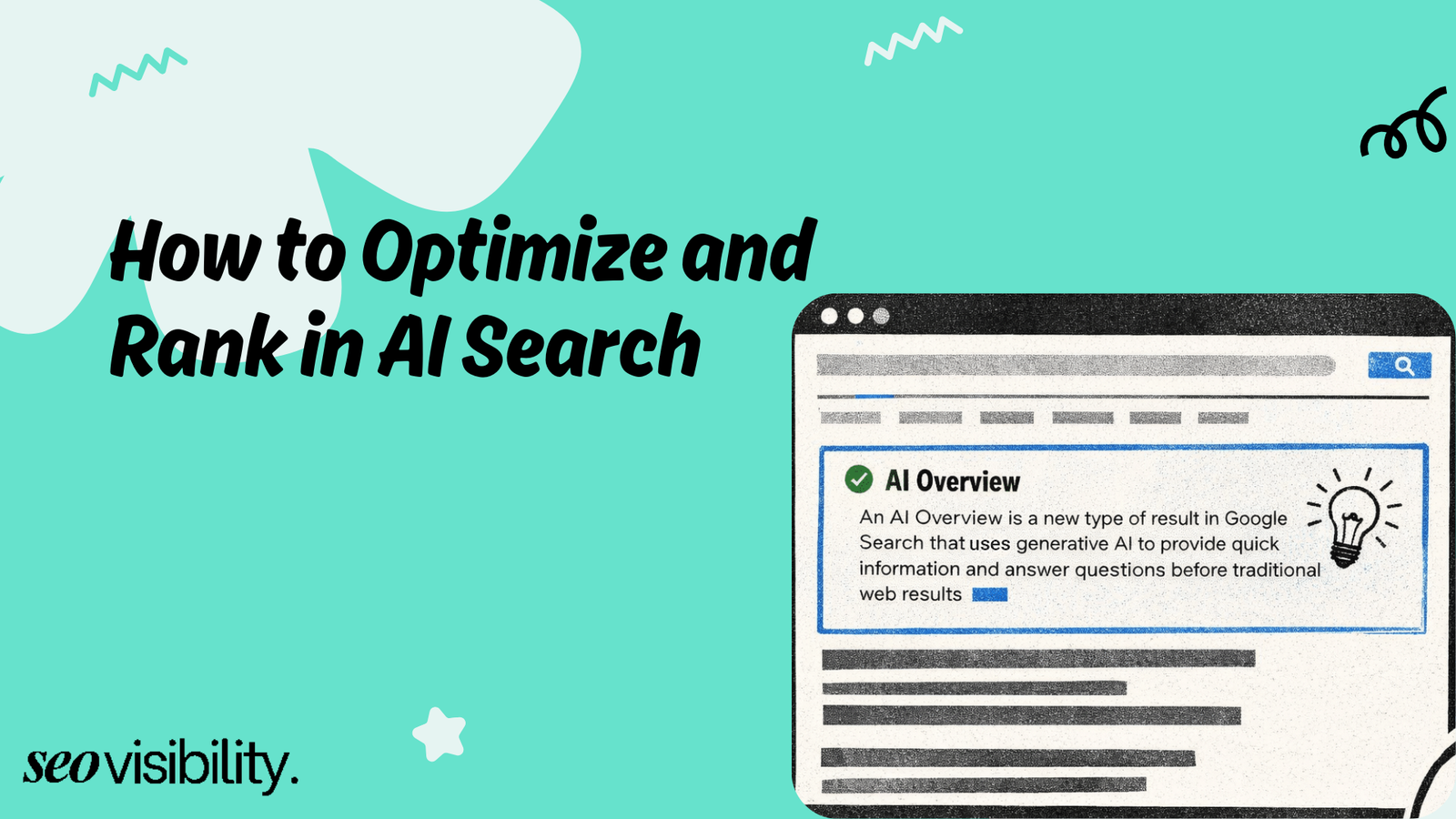
To rank in AI search in2027, you need to get your content cited, quoted, and recommended by AI systems like Google AI Overviews, AI Mode, ChatGPT, and Perplexity, not just ranked in the old blue links.
That means building strong topical authority, structuring pages so AI can extract clear answers, earning trusted mentions across the web, and keeping your content fresh and factual.
Google AI Overviews now appear on 48% to 60% of all searches and reach over 2 billion monthly users, while AI Mode has crossed 1 billion monthly users after I/O2027.
The old goal of landing at position one matters less now. The real goal is to be the source AI chooses to pull from when it writes the answer.
This guide breaks the whole thing into 5 layers that work together: classic SEO, Answer Engine Optimization (AEO), Generative Engine Optimization (GEO), AI Optimization (AIO), and Search Experience Optimization (SXO).
1. SEO (Search Engine Optimization)
SEO is still the foundation of everything. Google’s AI pulls answers from its own index, so if your site cannot be crawled, rendered, and trusted, it cannot be cited in AI Overviews or AI Mode. Strong technical health, clean on-page work, deep topical authority, clear entities, and real off-page trust are the entry ticket to the AI candidate pool.
Nothing here replaces classic SEO. It just raises the bar. The pages that win AI citations are almost always the same pages that already earn trust through good fundamentals.
Technical SEO
Technical SEO makes sure AI systems can actually reach and read your content. Start by opening your robots.txt to AI crawlers like GPTBot, ClaudeBot, PerplexityBot, and Google’s Gemini crawlers, because blocking them is the fastest way to vanish from generative results.
Speed and structure matter too. Aim for page loads under three seconds, pass Core Web Vitals including Interaction to Next Paint, confirm mobile-friendliness and HTTPS, and use self-referencing canonical tags on every target page.
Post your key content, headings, and structured data in the first HTML response, since many AI agents fall back to raw HTML when JavaScript takes too long to render.
Schema markup is a big lever here. Add Article, Organization, FAQPage, HowTo, BreadcrumbList, and Product schema where each one genuinely fits, because AI systems extract structured data first and content second.
One caution worth knowing: on Google AI Mode, generic Article schema showed a negative effect in some studies, while Product, Review, and FAQ schema helped, so match the schema to the page type instead of stacking it everywhere.
On-Page SEO
On-page SEO in2027 is about writing for extraction, not just for reading. Lead every H2 section with the direct answer in the first sentence or two, then add the supporting detail below, because AI Overviews usually pull from the first two or three sentences of a section.
Keep sections self-contained and around 150 to 300 words so each one works as a clean retrieval chunk. Use question-style headings that mirror how people actually search, break long paragraphs into short extractable units, and put key facts, stats, and conclusions in their own lines.
Cited pages tend to run 42% to 52% longer than uncited pages in the same position band, so depth still pays off when it is genuine and not padded.
Topical Authority
Topical authority is now the strongest signal for AI visibility. AI systems trust sites that cover a subject deeply and connect the pieces, so building interlinked content clusters is one of the highest-impact moves you can make.
The play is simple. Pick a pillar topic your audience searches for when solving a real problem, build 10 to 20 cluster articles around specific subtopics and questions, and interlink them aggressively so every cluster page links to the pillar and to a few sibling pages.
Internal linking within a tight cluster is the strongest page-level predictor of citation in some AI Mode data, so treat your link structure as part of the strategy, not an afterthought.
Entity & Semantic SEO
Entity SEO helps AI resolve who you are before it will cite you with confidence. AI needs to connect your brand, authors, and products to known entities in Google’s Knowledge Graph, so consistent naming and details across the web are essential.
Use Organization schema with a sameAs property pointing at your verified profiles, add Person schema for every author with real credentials, and link named people, companies, and concepts to their canonical references like Wikipedia, Wikidata, or an official domain.
Keep the same facts across your visible page, your schema, your author bio, and your external profiles, because contradictory information kills the confidence AI needs to quote you.
Off-Page SEO
Off-page SEO builds the outside trust AI leans on heavily. Around 85% of AI brand mentions come from off-site sources, so what other sites say about you matters as much as what you publish.
Focus on earning editorial backlinks from publishers with real organic traffic, plus mentions on platforms AI systems already crawl like Reddit, LinkedIn, Quora, and respected industry publications.
Even unlinked mentions from news sites, .edu, and .gov domains lift perceived trust, and consistent brand mentions across high-authority publications now rank among the ranking factors that matter most. Manufactured links and fake mentions remain a quality violation, so earn them honestly.
2. AEO (Answer Engine Optimization)
Answer Engine Optimization is about winning the direct answer, whether that is a featured snippet, a voice result, or an AI-generated summary. Since over 60% of Google searches now end without a click, being the answer often matters more than being a link.
AEO leans on clear question-and-answer structure. AI engines rely heavily on clean Q&A pairs when they build responses, so this is where formatting turns into visibility.
Featured Snippets
Featured snippets are still valuable because AI Overviews often pull from the same well-structured passages. To win them, add a canonical answer block near the top of the page: two to four sentences that directly answer the main query, phrased the way a user would phrase it.
Treat that block as a machine-readable summary of the whole page. Generative engines extract these blocks verbatim at a high rate, and the same structure that earns a snippet also feeds AI citations.
Question-Based Content
Question-based content matches how people talk to AI. Use tools that surface real user questions, then build H2 and H3 headings around them like “What is…” or “How do I…”, followed by a short one-paragraph answer and deeper detail below.
AI Mode is threaded, so people ask follow-ups. Map your headings to the natural sequence a buyer follows: what is it, how does it work, what does it cost, what are the alternatives, and how do I start. Covering the follow-ups, not just the head query, extends your citation potential across many related searches.
Voice Search SEO
Voice search rewards natural, conversational answers. People speak in full questions, so content that opens each section with a short, clear, spoken-style answer tends to perform well across voice and AI assistants.
Keep the tone conversational and the answers concise. Use no-fluff replies, short paragraphs, and bullet points that a device can read aloud in a few seconds without losing meaning.
FAQ Optimization
FAQ sections are one of the most reliable AI wins. Structured FAQ pages saw a 45% visibility jump in AI Mode data, and adding FAQPage schema helps AI parse the Q&A cleanly.
Add FAQ sections to your highest-traffic informational pages first. Match each question to the exact phrasing people use with AI, keep answers direct, and use the @graph structure in FAQPage schema so AI Mode can connect the questions to your content.
AI Overview Optimization
AI Overview optimization is about becoming the source Google quotes at the top of the page. AI Overviews prefer short, citable statements followed by supporting detail, not long essay prose.
Front-load a clear answer, add definition-style lead sentences, and include stat blocks and comparison tables that AI can lift directly. Then verify the source: check whether the Overview is actually citing your page or a competitor’s summary, and adjust the pages that keep losing the citation.
3. GEO (Generative Engine Optimization)
Generative Engine Optimization is the discipline of shaping your content and off-site footprint so large language models cite you inside their answers. Its surface is not a list of links. It is a paragraph or two of generated prose with embedded citations, which changes how you write and structure everything.
A repeatable GEO program runs in five stages: audit, entity, content, off-site authority, and measurement. Skipping entity clarity is the most common failure, so do not rush past it.
AI Citations
AI citations are the new currency of visibility. The two tactics with the largest measured citation lift are adding quotations from authoritative sources and adding relevant statistics with clear attribution.
Pair those with a canonical answer block at the top of every priority page and comprehensive schema coverage. Embedding three to five external authority citations per article can lift AI visibility by up to 40%, so evidence-dense writing beats vague marketing language every time.
LLM Visibility
LLM visibility means writing in clean, quotable chunks that make sense out of context. Keep paragraphs under 80 words, lead each one with the key point, and write standalone statements that hold up when an AI pulls them alone.
Original research is the strongest moat here. Publish proprietary data, first-hand experience, and non-obvious viewpoints, because that is the kind of content AI cannot synthesize from anyone else and has a real reason to cite you for.
Brand Mentions
Brand mentions across the web feed the trust AI needs to recommend you. Since most AI brand mentions come from off-site sources, spreading consistent, accurate mentions across Reddit, LinkedIn, PR, and niche publications directly shapes what AI says about you.
Keep your business facts identical everywhere: name, description, and details across directories like Crunchbase and LinkedIn, plus an accurate Google Business Profile. Earn references rather than manufacturing them, because cross-source consistency is what builds citation confidence.
Entity Signals
Entity signals tie your whole GEO effort together. Fix your presence on Wikidata, LinkedIn, and Crunchbase, publish clear About and author bio pages, and pursue a Wikipedia presence when it genuinely makes sense.
Make entity links explicit inside your content. When you name a person, product, or concept, link it to its canonical source so AI can resolve it fast, and keep your Organization and Person schema aligned with those external profiles.
AI Recommendations
AI recommendations are where GEO turns into sales. The goal is to be the brand AI name when someone asks “which company should I use for X,” so start by testing those exact prompts across ChatGPT, Perplexity, and Google AI Mode.
Ask each platform what it says about your brand and which brands it recommends in your category, then note where you appear, where you are absent, and whether the descriptions are accurate. Prioritize the prompts with commercial intent where your visibility is currently low, since those are the ones closest to revenue.
4. AIO (AI Optimization)
AI Optimization focuses specifically on Google’s own AI surfaces: AI Overviews and AI Mode. Google published official AI optimization guidance, confirming that clean, crawlable, original content authored by recognizable bylines is what wins in the AI era.
AIO is less about a single ranking and more about share of voice. AI Overviews tend to cite one authoritative source, while AI Mode often synthesizes from three to five, so you need to track how often you appear versus competitors, not just whether you appear.
AI Search Visibility
AI search visibility starts with a baseline audit. Run 50 core queries through AI Mode and AI Overviews, then document which produce AI answers, which cite your content, and which cite competitors.
Your SEO scoreboard now needs three columns: organic rank, AI Overview citation status, and AI Mode citation status. All three can differ for the same page and query, so tracking them together is the only way to diagnose why traffic moves.
AI Content Optimization
AI content optimization means restructuring your best pages for extraction. Do not rush to publish new content first. Instead, take your top-performing pages, break long paragraphs into short units, add headers that match user questions, and drop in specific data points with sources.
Use the inverted pyramid: put the key insight first, then the evidence. Aim for around 2,000 words of substantive content on informational pages, use multi-format layouts with text, tables, lists, and images, and keep each section self-contained.
AI Overviews
AI Overviews reward structure and specificity. The content most likely to be cited is structurally parseable, clearly attributed to an authoritative entity, and specific enough that AI can quote it with confidence.
The data shows clear winners and losers by content type. Use the table below to prioritize what to fix first.
| Content Type | AI Mode Visibility Change | Citation Rate | Priority Action |
|---|---|---|---|
| Pages with HowTo markup | -55% | High | Validate step structure and entity declarations |
| Structured FAQ pages | -40% | High | Add FAQPage schema |
| Long-form guides (3000+ words) | -30% | Very High | Clean heading hierarchy plus Article schema |
| Video-only content | -25% | Medium | Add transcript and companion text |
| Blog posts without schema | -40% | Low | Implement Article and BreadcrumbList schema |
| Thin product pages (under 500 words) | -60% | Very Low | Expand with entity-rich content and Product schema |
AI Mode Optimization
AI Mode works differently from AI Overviews. It runs multi-step query fan-out retrieval, breaking one question into many sub-queries, and it can cite sources that do not even rank organically. Optimizing for it means targeting those sub-query clusters and publishing content at sub-query granularity.
Restructure for extraction, not reading time: put a direct, self-contained answer in the first 50 words of every page. Cover the follow-up questions in your H2s, build strong entity clarity, and make content multimodal since the new search box accepts images, files, and video.
Google upgraded AI Mode to Gemini 3.5 Flash as the global default, and longer, comprehensive content that answers follow-ups tends to get cited more often there.
AI Search Analytics
AI search analytics is messier than classic SEO reporting, so set expectations early. Somewhere between 35% and 70% of visits from AI tools arrive with no referrer and get filed under Direct in GA4, which means the real number is often about double what you see.
Use the tools that exist now. GA4 added a native AI Assistant channel that groups visits from ChatGPT, Gemini, and Claude, and Search Console is rolling out AI features and AI Indexing Insights reports for impressions and clicks from AI surfaces. Track citation frequency, share of voice against competitors, citation sentiment, and AI-referred conversions, and add GA4 channel groupings for chatgpt.com, perplexity.ai, gemini.google.com, and copilot.microsoft.com.
5. SXO (Search Experience Optimization)
Search Experience Optimization combines SEO, UX, and conversion rate optimization into one framework, because ranking is worthless if the visitor bounces or fails to convert. It optimizes the entire journey: search query, SERP impression, click, page experience, and conversion.
With most searches ending without a click, the visitors who do reach your site are more valuable than ever. In fact, clicks from AI Overview-affected pages have been shown to convert at up to 23 times the rate of standard search visitors, so making each visit count is the whole point of SXO.
Search Intent
Search intent is the north star of SXO. Match the intent behind the query, not just the keyword, because a page that answers the wrong intent loses the visitor no matter how well it ranks.
Map your content to the right sub-intents and formats. A “how to” query wants a step-by-step guide, a comparison query wants a table, and a “best” query wants a structured shortlist, so aligning format to intent is what keeps people on the page.
UX & Page Experience
Page experience is now a measured signal, not a nice-to-have. Google factors in Core Web Vitals, Interaction to Next Paint, and engagement signals when it decides what to rank.
Keep pages fast, mobile-friendly, and easy to scan with clean headings, short paragraphs, and clear visual hierarchy. A smooth, quick experience reduces bounce and signals to Google that your page satisfies the search, which protects both your rankings and your AI citations.
CRO
Conversion rate optimization turns hard-won traffic into revenue. Since fewer visitors arrive but each one is higher intent, the job shifts from chasing volume to converting the visitors you get.
Give every page a clear next step, remove friction from forms, and make your offer obvious above the fold. Test headlines, calls to action, and layouts, then measure goal completion against a benchmark so you know what actually moves conversions.
Content Experience
Content experience is how it feels to read and use your page. Multi-format pages that mix text, tables, lists, and relevant images outperform text-only pages in AI Mode and keep human readers engaged longer.
Use real headings, lists, and tables for genuine hierarchy and comparisons, and keep critical facts available as text rather than trapped inside images. Add images and diagrams only when they explain a relationship or provide evidence, not for decoration.
Engagement & Retention
Engagement signals tell Google and AI systems that your content delivers. High bounce rates and quick exits suggest your page did not satisfy the search, which erodes rankings over time even when your technical SEO is clean.
Build a composite SXO score to keep every page honest, weighting visibility, experience, and conversion together so no single metric hides a weak spot. The formula many teams use is straightforward:
SXO Score=(Visibility×0.3)+(Experience×0.4)+(Conversion×0.3)
Visibility is based on ranking and traffic versus target, experience on Core Web Vitals, bounce rate, and time on page, and conversion on goal completion versus benchmark.
Start Ranking in AI Search and Turn Visibility Into Real Growth
Ranking in AI search in 2026 comes down to one shift: stop chasing the blue link and start becoming the source AI trusts, quotes, and recommends. When you get the fundamentals right, structure content for extraction, build entity clarity, earn honest mentions, and optimize the full experience, you show up across every surface where your customers now search.
The businesses winning right now are not the ones publishing the most content. They are the ones publishing the clearest, most trustworthy, most extractable content backed by real authority and consistent signals.
Do that across all five layers, measure your citation share, and refine every quarter, and you build a durable position that compounds instead of a quick fix that fades.


![How Much Does an SEO Expert Cost in 2026 [SEO Pricing]](https://seovisibility.co/wp-content/uploads/2026/01/how-much-does-an-seo-expert-cost.png)